





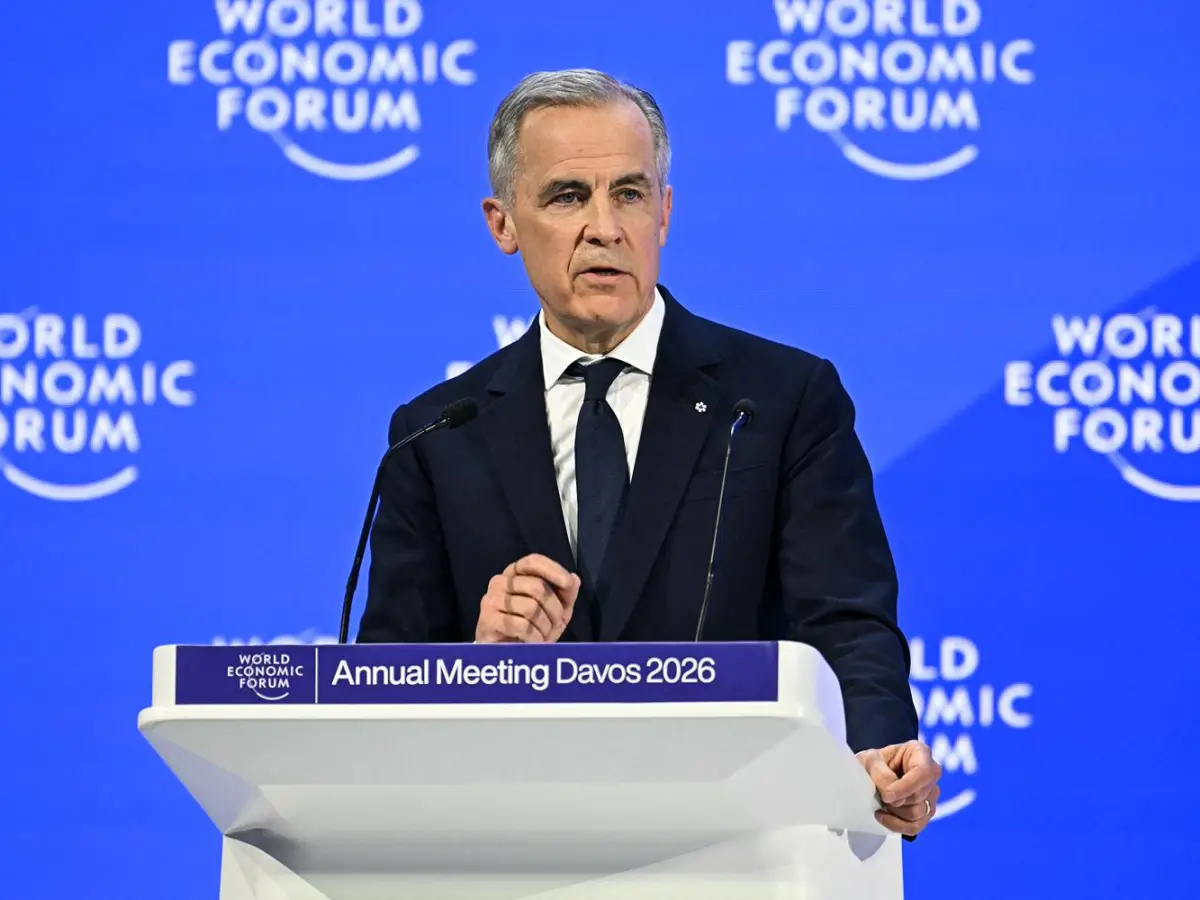
Prime Minister Mark Carney has announced an $800-million agreement with Norwegian defence company Kongsberg to supply Joint Strike Missiles for Canada’s future fleet of Royal Canadian Air Force fighter jets, including the F-35, as Ottawa ramps up military spending at the NATO summit in Ankara.
The announcement comes just days after Canada selected Germany’s TKMS as the preferred bidder to build its next-generation submarine fleet, marking another major investment in the country’s military modernization.
The new missile procurement forms part of a broader push by NATO allies to increase defence spending following sustained pressure from the United States for member nations to shoulder a greater share of the alliance’s security responsibilities.
Speaking to reporters on the final day of the summit, Carney said U.S. President Donald Trump has effectively won the long-running debate over NATO defence spending.
“It’s not just that he’s winning the argument — he’s won the argument,” Carney said, adding that allies increasingly recognize the need to take greater responsibility in the face of evolving global security threats.
The prime minister pointed to rapidly changing military technologies, including hypersonic missiles and autonomous warfare systems, as reasons why NATO members must strengthen their defence capabilities.
Carney revealed he spoke with Trump on Sunday and described the U.S. president as being in good spirits during their conversation and at Tuesday evening’s NATO leaders’ dinner.
Despite that, Trump publicly criticized the alliance during the summit, accusing NATO members of failing to adequately support the United States during the conflict with Iran. He also renewed criticism over Greenland and warned Spain could face trade consequences over defence-related disagreements.
“I’m not happy with NATO,” Trump said, arguing that allies had not done enough to support the U.S. on Iran while reiterating his concerns about Greenland.
NATO Secretary General Mark Rutte attempted to ease tensions, crediting Trump with driving a significant increase in defence spending across the alliance.
Canada’s latest military investments are expected to substantially boost its defence expenditures as Ottawa works toward meeting NATO spending commitments.
Earlier this week, the federal government selected German shipbuilder TKMS as the preferred partner for Canada’s next submarine fleet. Kongsberg, the recipient of the new missile contract, is also part of the supply chain for TKMS’ 212CD submarines.
Although South Korean defence firm Hanwha lost the submarine competition, Carney said Canada continues to strengthen its strategic relationship with Seoul. Following a meeting with South Korean President Lee Jae Myung, the prime minister said discussions quickly shifted toward expanding cooperation on artificial intelligence, advanced technology and shared security priorities.
Carney also announced that Operation Reassurance, Canada’s long-running military mission leading a multinational NATO brigade in Latvia, will be extended until 2031. Canada will increase its troop presence in Latvia from 2,200 to approximately 2,600 personnel, reinforcing its commitment to NATO’s eastern flank.