





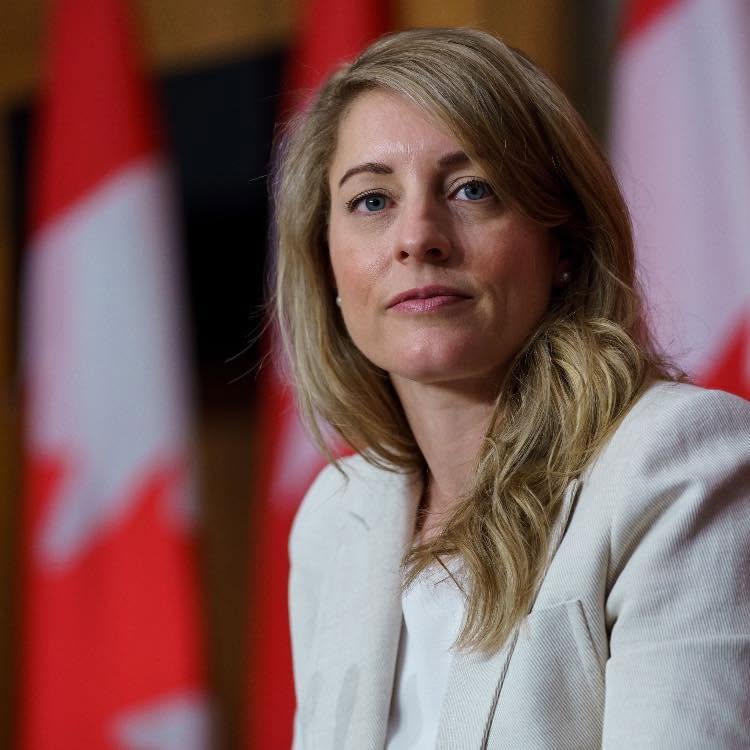
Industry Minister Mélanie Joly is in China this week meeting with leading Chinese electric vehicle manufacturers in an effort to attract investment and production facilities to Canada, as Ottawa seeks to balance affordable EV access with protecting domestic jobs and supply chains.
During her four-day visit, Joly is holding talks with executives from BYD, Chery, Geely and Shanghai Launch Automotive Technology. The discussions are focused on encouraging the companies to establish manufacturing operations in Canada rather than simply exporting vehicles into the country.
The minister’s itinerary includes visits to BYD’s manufacturing facility in Changzhou, Shanghai Launch’s operations in Wuxi, Chery’s headquarters and Geely’s research and development centre in Shanghai before concluding with meetings in Beijing.
Joly said the goal is to ensure Canadians have access to affordable, technologically advanced vehicles while safeguarding Canada’s automotive workforce.
“Our objective is to offer affordable vehicles with the latest technology while protecting the 500,000 Canadians employed in the auto sector,” Joly told the media.
The federal government has outlined four requirements for any Chinese EV investment in Canada. Projects must involve majority Canadian-owned joint ventures, meet Canadian labour standards, incorporate Canadian-made components and utilize secure software systems that protect consumer data.
Joly has also encouraged partnerships with Canadian manufacturers such as Magna International, which already assembles vehicles for Chinese automaker XPeng in Europe.
However, some automakers appear reluctant to accept Ottawa’s framework. BYD Executive Vice-President Stella Li recently indicated the company would prefer full ownership of any Canadian operation, arguing that its vertically integrated business model is incompatible with a joint-venture structure.
Geely, meanwhile, has signalled plans to enter the Canadian market and has expressed interest in local manufacturing. The company already maintains a Canadian presence through its ownership of Volvo Cars and Polestar and has reportedly begun hiring staff in Toronto.
Chery has remained largely silent publicly but has been recruiting in Canada and promoting long-term plans for growth through its Omoda and Jaecoo brands.
Joly’s visit follows a significant policy shift announced earlier this year. During Prime Minister Mark Carney’s visit to China in January, Canada agreed to reduce its 100 per cent tariff on Chinese-made EVs to 6.1 per cent for an annual quota of 49,000 vehicles.
In exchange, China eased restrictions on Canadian canola exports. Ottawa framed the agreement as a way to encourage Chinese investment in Canadian manufacturing within the next three years.
The approach marks a notable departure from the previous position of former industry minister François-Philippe Champagne, who had argued Canada should never serve as a gateway for Chinese EVs into the North American market.
Joly has already demonstrated a willingness to enforce the government’s conditions. Earlier this year, she rejected a proposal by Stellantis to assemble Leapmotor electric vehicles from kits shipped from China at its idled plant in Brampton, Ont.
The minister argued that Canadian assembly operations must support local suppliers rather than function as final assembly points for imported components. Ottawa subsequently reduced Stellantis’ tariff-free import quota and warned it could seek repayment of federal subsidies tied to the Brampton facility unless production resumes.
While Ottawa continues to allow up to 49,000 Chinese-made EVs to enter Canada annually under the quota system, officials are considering limits on how many vehicles a single manufacturer can import.
The strategy has drawn criticism from both industry groups and political leaders. Ontario Premier Doug Ford has warned against opening the market to low-cost Chinese imports without guaranteed domestic investment, while union leaders and automotive industry representatives have raised concerns about the impact on Canadian manufacturing jobs.
The initiative also risks creating friction with the United States as Canada prepares for a review of the Canada-United States-Mexico Agreement. U.S. Trade Representative Jamieson Greer has criticized Canada’s decision to permit limited Chinese EV imports under the new framework.
Following her China trip, Joly will travel to Japan for meetings with executives from Honda and Toyota, two companies that account for the majority of Canada’s vehicle assembly production.
The discussions come after Honda paused plans for a $15-billion electric vehicle project in Ontario earlier this year amid weaker global EV demand.
As Ottawa seeks to diversify investment and strengthen its automotive sector, Joly’s mission represents one of the government’s most ambitious efforts to attract foreign EV manufacturing while navigating growing geopolitical and trade tensions between China, Canada and the United States.