





Prime Minister Mark Carney is heading to Europe for a high-profile diplomatic visit aimed at significantly deepening Canada’s relationship with the European Union as Ottawa confronts an escalating trade dispute with the United States and seeks to reduce its economic dependence on its largest trading partner.
Canada is exploring a new strategic partnership with the EU centred on investment and potentially greater mobility for Canadians seeking to live, work and study in Europe. According to a senior Canadian official familiar with the discussions, Ottawa is interested in arrangements that could allow Canadians greater freedom to work in Europe without visas.
Canadian officials have stressed that Ottawa is not pursuing EU membership, associate membership or arrangements comparable to those held by Norway and Switzerland. Instead, the Carney government wants a partnership specifically designed around Canadian priorities, with investment at its core and without transferring Canadian decision-making authority to Brussels.
The economic stakes are considerable. Roughly 70 per cent of Canadian exports currently go to the United States, making Europe a central part of Carney’s strategy to diversify Canada’s trade and investment relationships. Canada and the EU already cooperate extensively on trade, defence, energy, technology and critical minerals, while bilateral trade reached approximately $147 billion in 2025, making the EU Canada’s second-largest trading partner.
Carney will attend European Commission President Ursula von der Leyen’s State of the Union address on Wednesday as a guest of honour before addressing the European Parliament on Thursday. The speech will give the prime minister another major international platform to argue that middle powers should cooperate more closely and resist economic coercion from larger countries.
That message has become particularly significant amid Canada’s confrontation with U.S. President Donald Trump. Following the collapse of bilateral trade negotiations, Canada retaliated against American tariffs and rejected U.S. demands that Carney has argued would compromise Canadian sovereignty. The European Union has taken a different approach, shelving retaliation and accepting an agreement under which most EU exports to the United States face tariffs of up to 15 per cent.
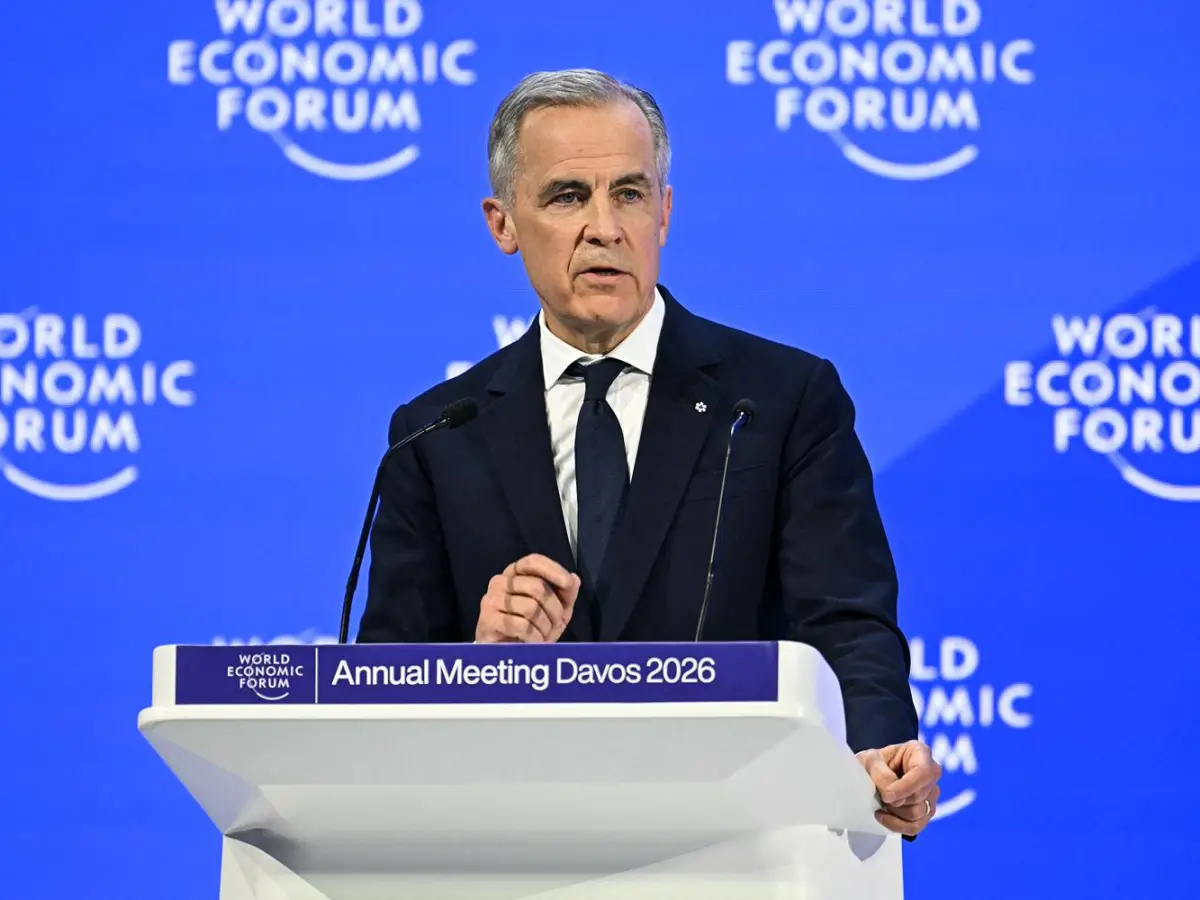
Carney has previously argued that middle powers weaken their bargaining position when they negotiate individually against dominant global powers. His January speech in Davos, which drew a sharp response from Trump, called on countries such as Canada and European states to work together rather than accept agreements imposed by more powerful economies.
His position has attracted attention within Europe, where some political figures have praised Canada for taking a firmer approach toward Washington. However, European governments have generally been more cautious, partly because of their continuing dependence on the United States for NATO security and support for Ukraine.
Finance Minister François-Philippe Champagne has rejected suggestions that Canada’s European strategy is simply intended to increase Ottawa’s bargaining leverage against Washington. He said Canada intends to continue working with the United States while simultaneously developing stronger economic relationships elsewhere, arguing that both the global environment and America itself have changed.
The European relationship is already expanding beyond conventional trade. Canada became the first non-European country to join the EU’s €150-billion SAFE defence program this year, providing Canadian companies with access to joint defence procurement opportunities. The European Parliament has also announced plans to establish an office in Ottawa, its 10th outside the European Union, with responsibilities extending to the Arctic.
Carney’s European trip follows Canada’s inaugural Investment Summit in Toronto, where the federal government brought together hundreds of global investors and business leaders as part of its broader effort to attract international capital and diversify the Canadian economy.
Canada and the EU are also scheduled to hold another summit in Montreal in late October, potentially providing another opportunity to advance negotiations on investment, trade, defence cooperation and mobility.
The European push reflects a broader strategic shift underway in Ottawa. Rather than replacing the United States as Canada’s most important economic relationship, the Carney government is seeking to build additional partnerships strong enough to reduce the country’s vulnerability to decisions made in Washington.
Carney will also travel to Britain, where he is expected to meet Prime Minister Andy Burnham for the first time. But the central political message of the European trip will extend well beyond individual meetings: as relations with Washington become increasingly unpredictable, Canada is attempting to build a wider network of economic and strategic partners — and Europe is emerging as one of the most important pillars of that strategy.