





Canada’s latest retaliatory tariffs against the United States took effect at 12:01 a.m. on Sept. 8, marking another major escalation in the trade confrontation following the collapse of bilateral negotiations on Aug. 21.
Ottawa has imposed tariffs of 15, 25 and 50 per cent on $27.6 billion worth of U.S. imports, matching Washington’s latest measures dollar-for-dollar and rate-for-rate. The United States began imposing 50 per cent tariffs on $27.6 billion worth of Canadian goods on Aug. 22.
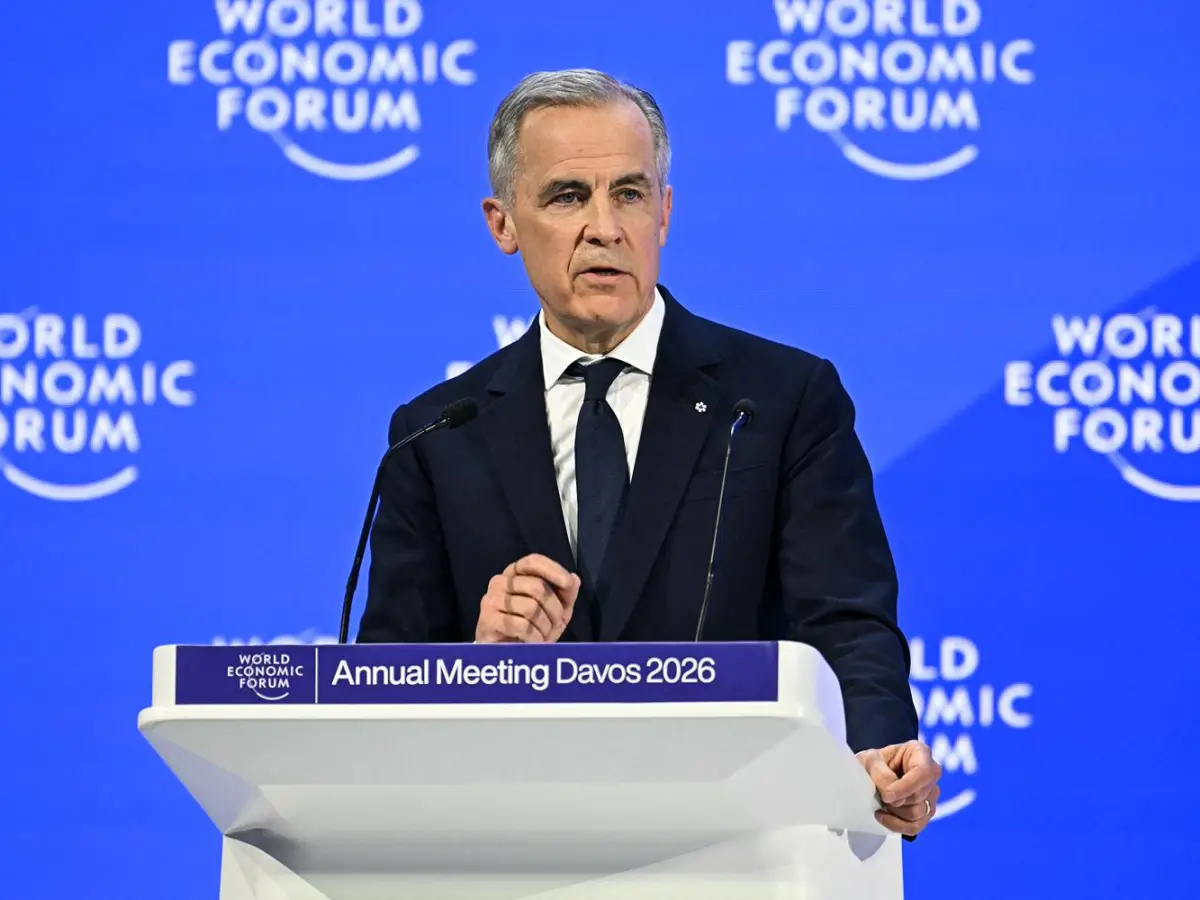
Prime Minister Mark Carney is warning Canadians that confronting Washington and reducing Canada’s dependence on the U.S. economy will carry costs. His government maintains, however, that accepting the terms proposed by Washington would have posed a greater long-term threat to Canadian economic interests and sovereignty.
“That pivot will come at a cost. There’s always a cost to action. But it doesn’t come close to the cost of standing still,” Carney said.
What Canada is tariffing
The counter-tariffs apply to qualifying U.S.-origin products, with goods already in transit when the measures took effect exempted.
The $27.6-billion package targets sectors Ottawa says have been particularly affected by U.S. trade measures, including steel and aluminum, dairy, appliances, agricultural equipment, pulp and paper, plastics and electronics.
Some steel and aluminum duties previously set at 25 per cent have been increased to 50 per cent. The tariff schedule also includes certain dairy products and smartphones at 50 per cent, while some ovens, cooking ranges and other appliances face 25 per cent duties.
Previously imposed Canadian counter-tariffs, including measures affecting American vehicles, also remain in place.
Why Canada rejected Washington’s offer
Ottawa says negotiations collapsed after Washington presented demands that Canada considered economically damaging and unacceptable.
Carney has said the proposed terms raised concerns about the future of Canada’s automotive and other strategic industries, its ability to negotiate trade agreements independently with other countries and protections involving French language and culture.
The government is increasingly framing the confrontation as more than a dispute over tariff rates, arguing that the underlying issue involves Canada’s economic sovereignty and its ability to make independent policy decisions.
Washington disputes that account.
U.S. Trade Representative Jamieson Greer says Canadian negotiators walked away from an agreement that was essentially ready to be accepted and has argued that any return to negotiations now depends on Canada.
Carney maintains that Washington introduced last-minute demands that were unfair, uneconomic and harmful to Canadian interests.
The two governments therefore remain divided not only over the substance of the dispute, but over responsibility for the collapse of negotiations.
Retaliation will also carry costs for Canadians
Canada’s counter-tariffs are intended to create leverage against Washington, but they can also increase costs domestically.
Canadian importers facing tariffs on American products can absorb the additional expense, negotiate lower prices with suppliers, switch to alternative sources or pass some of the cost on to consumers.
Prolonged uncertainty could also cause businesses to postpone investment, expansion and hiring decisions.
Ottawa has announced $7.5 billion in new and enhanced assistance for tariff-affected businesses and workers, on top of nearly $25 billion in previously announced support.
The latest measures include $1.5 billion through the Regional Tariff Response Initiative, $2 billion for the Canada Strong Diversification Fund and $3.5 billion in rapid-response assistance for workers and employers.
Chrétien points to Canada’s energy leverage
Former prime minister Jean Chrétien has backed Canada’s retaliation while suggesting Ottawa has additional economic tools available if the dispute becomes significantly worse.
Chrétien noted that Washington has excluded several strategically important Canadian exports from its tariffs, including oil, natural gas, electricity and potash.
He suggested Canada could eventually consider export taxes on those products.
Such a move would represent a major escalation. Canada’s energy and resource exports provide leverage because U.S. consumers and industries depend on them, but restricting or taxing those exports could also trigger significantly stronger retaliation from Washington and raise costs on both sides of the border.
Trump targets Bombardier
U.S. President Donald Trump has separately threatened to prevent Bombardier from selling aircraft in the United States unless the Canadian manufacturer builds them there.
The threat is particularly significant because the American market accounts for roughly half of Bombardier’s sales.
But the company also has a substantial U.S. presence, employing approximately 3,500 workers and relying on about 2,800 American suppliers, including operations in states such as Kansas and Texas.
That interconnectedness has generated some political pushback in the United States. Republican Kansas Congressman Ron Estes has publicly highlighted Bombardier’s contribution to employment in his state and its involvement in U.S. national-security work.
The Bombardier dispute illustrates one of the central complications of the wider trade conflict: measures designed to damage Canadian companies can simultaneously affect American workers, suppliers and communities.
Canadian economy enters dispute from weaker position
The escalation comes as several Canadian economic indicators show signs of weakness.
Canada lost 42,000 jobs in August while unemployment remained at 6.4 per cent. Ontario accounted for approximately 18,000 of those job losses.
Canada’s merchandise trade surplus also declined sharply, falling from $4.2 billion in June to $769 million in July.
Those figures cannot be attributed to the counter-tariffs that only took effect on Sept. 8. Instead, they indicate that the Canadian economy was already facing weaker conditions before the latest trade measures had time to affect production, investment or employment.
Carney pushes long-term diversification strategy
Carney argues that Canada must use the confrontation as an opportunity to reduce its reliance on the U.S. market by expanding trade elsewhere, attracting greater domestic investment and developing new international markets.
The scale of that challenge remains substantial, with nearly 68 per cent of Canadian exports still destined for the United States.
There are early indications of diversification. Canadian exports to the U.S. fell 6.6 per cent in July, while the American share of total Canadian exports declined to approximately 66.4 per cent from 72.6 per cent a year earlier.
Exports to countries outside the United States, meanwhile, increased 7.4 per cent.
But replacing a substantial portion of U.S. trade would likely take years because the two economies are connected through decades of integrated infrastructure, investment and supply chains.
50% auto tariffs pose major threat to Ontario
One of the largest risks still ahead is Trump’s threat to impose 50 per cent tariffs on Canadian vehicles and auto parts next year if Canada does not change course.
Such measures could have particularly serious consequences for Ontario’s automotive manufacturing centres, including Windsor, Oshawa, Oakville and Alliston, as well as the province’s extensive auto-parts supply chain.
North American vehicle manufacturing is deeply integrated, with components sometimes crossing the Canada-U.S. border several times before a completed vehicle reaches consumers.
A 50 per cent tariff could therefore disrupt Canadian production while simultaneously raising costs for American automakers and suppliers.
Trade pressure extends beyond tariffs
Canada is also applying economic pressure outside traditional tariff measures.
Eight of Canada’s 10 provinces continue to restrict or prohibit sales of American alcohol, while U.S. spirits exports to Canada have fallen by more than 70 per cent year over year, according to figures cited in the source.
Such measures form part of a broader Canadian strategy aimed at increasing pressure on affected U.S. companies, farmers and manufacturers, which could in turn encourage American political representatives to push Washington toward a resolution.
No clear off-ramp from escalating dispute
The immediate danger is an extended cycle of retaliation.
Canada has responded to U.S. tariffs. Washington can impose additional measures in response to Canada’s retaliation, potentially prompting another Canadian countermeasure.
That uncertainty leaves companies on both sides of the border making investment, production and hiring decisions without knowing what the trading environment will look like several months from now.
Carney has said Canada does not want an endless escalation and continues to leave the door open to negotiations. However, according to the supplied material, there were no active ministerial or official Canada-U.S. trade negotiations at that point.
CUSMA remains the larger economic risk
Despite the severity of the dispute, approximately 80 per cent of Canadian exports to the United States have continued to enter duty-free under protections provided by CUSMA, also known as USMCA.
That distinction is critical because the $27.6-billion counter-tariff package covers only a fraction of the enormous bilateral trading relationship.
A serious weakening of the broader preferential trading framework under CUSMA could have significantly greater economic consequences.
Canada sends nearly 68 per cent of its exports to the United States, while the U.S. economy is roughly 13 times larger than Canada’s.
The immediate escalation therefore represents only one stage of a potentially much larger confrontation: Canadian counter-tariffs are already in effect, 50 per cent U.S. auto and parts tariffs remain a looming threat, and a wider breakdown of CUSMA would represent a substantially larger structural shock.
The further the dispute progresses along that path, the greater the potential economic damage for Canada — and the more difficult it could become for both governments to find an off-ramp.