




Prime Minister Mark Carney is concluding a nine-day international tour aimed at attracting foreign investment and strengthening trade ties, as his government faces criticism at home over its outreach to major global powers and elite economic forums.
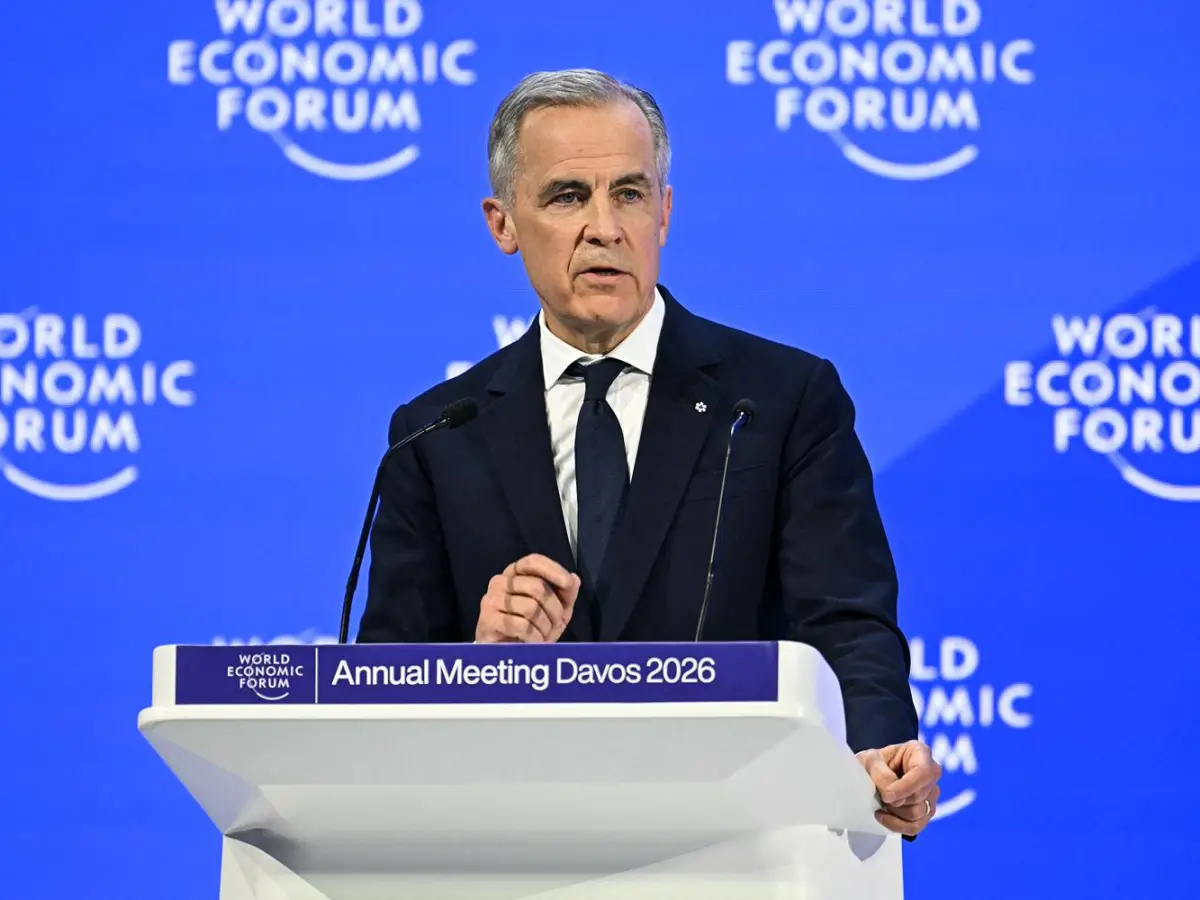
Carney is spending the final leg of the trip in Switzerland for the World Economic Forum, where he is scheduled to meet with international investors and attend a luncheon with fellow national leaders before returning to Ottawa later Wednesday.
The tour began in Beijing, where Carney secured an agreement with China to lower tariffs on Canadian agricultural products in exchange for limited market access for Chinese electric vehicles. The deal marked a significant step in thawing trade relations that had been strained for years.
International Trade Minister Maninder Sidhu said the progress reflects early efforts by the Carney government to re-engage Beijing after coming to office last year.
“When I first met my Chinese counterpart in June, the Joint Economic and Trade Commission had been dormant for eight years,” Sidhu told reporters in Davos. “We restarted that dialogue, and you saw the results of that work last week in China.”
Sidhu said the agreement has opened access for more than $7 billion in Canadian agricultural exports, including initial shipments of beef and canola, with additional opportunities in energy storage, clean technology and electric vehicles.
After China, Carney travelled to Qatar, where he sought investment in major Canadian infrastructure and energy projects and pledged to strengthen cultural ties by expanding direct air service between the two countries.
The prime minister’s trip coincided with heightened geopolitical tensions at Davos, where U.S. President Donald Trump is set to deliver a speech amid controversy over new tariffs and threats directed at European nations resisting his stated ambition to take over Greenland.
Although both leaders were scheduled to be in Davos on Wednesday, they are not expected to meet. A technical issue with Trump’s aircraft delayed his arrival until Carney’s planned departure time.
Carney’s travels have drawn criticism from both Conservative and Liberal opponents, who question the government’s engagement with countries that have faced scrutiny over human rights and its embrace of the global political and financial elite gathered in Davos.
At the forum, Carney laid out a broad foreign policy vision, declaring that the postwar world order has collapsed and urging so-called middle powers to work together as larger nations exert pressure through economic coercion.
“If you are not at the table, you are on the menu,” Carney said.
While he did not explicitly mention Trump or U.S. tariff policy, the remarks were widely interpreted as a response to the disruption of traditional geopolitical norms and a signal of how Canada intends to navigate an increasingly fractured global landscape.