





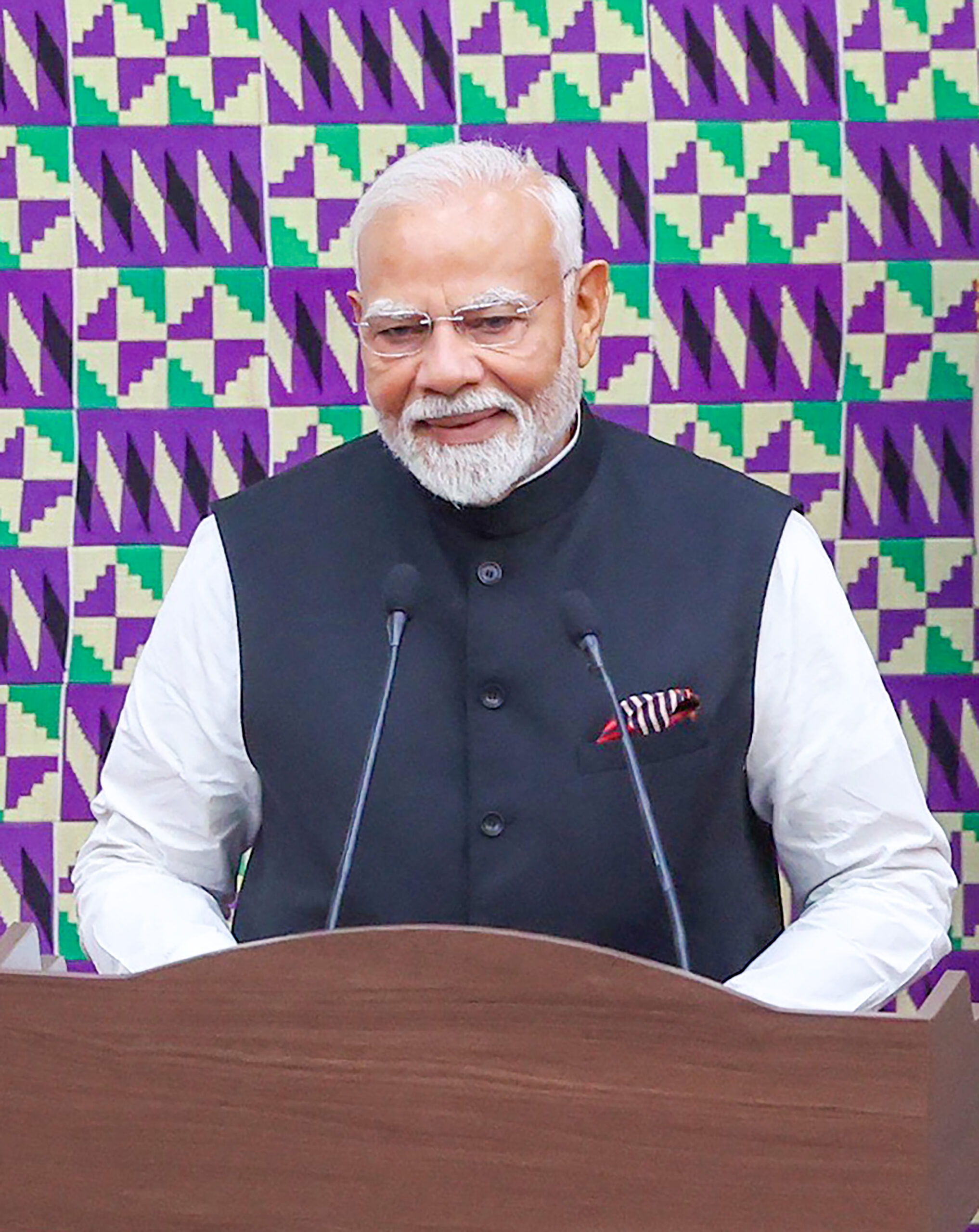
Prime Minister Narendra Modi arrived in Jordan on Monday for a two-day visit, marking his first full bilateral engagement with the country and the opening leg of a three-nation tour that will also take him to Ethiopia and Oman. The visit comes at a time of heightened instability in West Asia and is expected to focus on security cooperation, regional peace efforts and economic ties.
Jordan has emerged as an important political and economic partner for India, with relations deepening steadily in recent years. During his stay on December 15 and 16, Modi is scheduled to meet King Abdullah II bin Al Hussein, a key regional figure who has been actively involved in efforts to advance the Israel–Palestine peace process.
As a moderate Islamic nation, Jordan has positioned itself as a regional bulwark against radicalisation, extremism and terrorism. Discussions between New Delhi and Amman are expected to include a shared approach to tackling terrorism as a global threat. Sources said the recent terrorist attack at Sydney’s Bondi Beach is likely to feature in the talks, alongside broader concerns about regional and international security.
The agenda will also cover the Gaza peace plan, defence cooperation and India’s food security needs — an area where Jordan plays a strategic role. India is Jordan’s fourth-largest trading partner, with bilateral trade valued at $2.875 billion in 2023–24. India imports significant quantities of fertilisers from Jordan, making the country central to New Delhi’s efforts to secure critical agricultural inputs.
India has also invested heavily in Jordan’s potash and phosphate sectors. The Jordan India Fertilizer Company, a joint venture between IFFCO India and the Jordan Phosphates Mines Company, was established with an investment of $860 million and is a major supplier of phosphoric acid to India.
Beyond fertilisers, Indian investment is visible in Jordan’s garment industry, with more than 15 NRI-owned companies operating in Qualified Industrial Zones and accounting for roughly $500 million in cumulative investment. Defence ties have also expanded, with the two countries signing a memorandum of understanding on defence cooperation in 2018.
Jordan is home to an Indian community of around 17,500 people, most of whom work in garments, construction, manufacturing, and international organisations including the United Nations.
Against the backdrop of regional turmoil, Modi’s visit underscores India’s growing engagement with West Asia — balancing security concerns, economic interests and diplomatic outreach in a strategically vital region.