





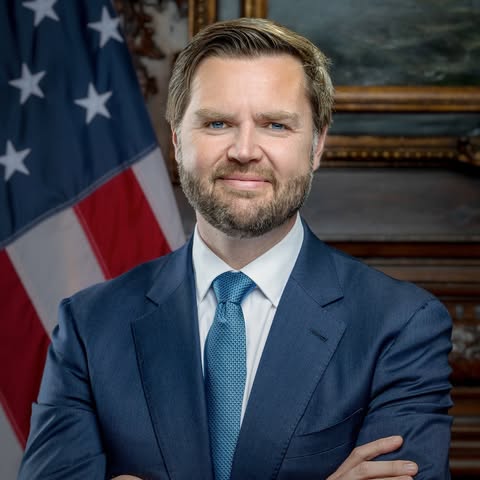
Vice President JD Vance declined to condemn antisemitic voices within the conservative movement during a speech at Turning Point USA’s annual convention, urging Republicans to avoid what he called ideological “purity tests” as internal divisions roil the party.
Speaking Sunday at the closing session of the four-day gathering, Vance said the conservative movement should remain open to anyone who “loves America,” even as debates over antisemitism and who belongs in the movement dominated the event.
“I didn’t bring a list of conservatives to denounce or to de-platform,” Vance told attendees, pushing back against calls to ostracize figures such as podcaster Nick Fuentes, whose rhetoric has sparked outrage within Republican ranks.
The comments came as Turning Point USA, now led by Erika Kirk following the assassination of her husband and founder Charlie Kirk, signaled strong support for Vance as a future Republican standard-bearer. Kirk publicly endorsed him as a potential successor to President Donald Trump, giving Vance a boost from one of the conservative movement’s most influential grassroots organizations.
But the tensions on display underscored the challenges facing Republicans as they look toward a post-Trump future. With Trump constitutionally barred from another term despite hinting otherwise, leading figures on the right are jockeying for influence — and struggling to define what the next phase of the movement should look like.
The convention featured sharp disagreements over antisemitism, Israel, environmental policy and the role of populist media figures. Conservative commentator Ben Shapiro used his opening-night speech to condemn what he called “charlatans” and “grifters” spreading conspiracy theories, singling out Tucker Carlson for hosting Fuentes on his podcast.
Carlson dismissed the criticism when he took the stage shortly afterward, rejecting the idea of a Republican civil war and portraying the backlash as an effort to undermine Vance’s future prospects. He described Vance as the figure most closely aligned with what he called the “core idea” of the Trump coalition: “America First.”
Turning Point spokesperson Andrew Kolvet framed the disputes as a healthy, if uncomfortable, debate about the movement’s future, saying conservatives should not be expected to think in lockstep.
In his own remarks, Vance acknowledged the controversies but refused to outline firm boundaries for participation in the conservative movement beyond patriotism.
“We don’t care if you’re white or black, rich or poor, young or old, rural or urban,” he said. “We have far more important work to do than canceling each other.”
While Vance avoided naming individuals, his comments came amid growing scrutiny of right-wing figures who espouse antisemitic views, including Fuentes and podcaster Candace Owens. Critics argue that allowing such voices into the mainstream risks normalizing bigotry.
Vance instead focused on the administration’s accomplishments, citing actions at the southern border, economic policy and efforts to dismantle diversity, equity and inclusion initiatives — which he said had been relegated to the “dustbin of history.” He drew applause by declaring that Americans no longer needed to apologize for being white and by describing the United States as a Christian nation with shared moral roots.
Those messages resonated with many attendees, including young conservatives who said they valued Vance’s emphasis on free expression and religious identity.
Although Vance has not announced any plans to run for president, Turning Point leaders made clear they are backing him as a future contender. Trump himself has praised Vance, as well as Secretary of State Marco Rubio, as possible successors and has suggested they could even form a future Republican ticket.
For now, the fierce debates at Turning Point offered a preview of the ideological battles ahead — as Republicans grapple with how to hold together Trump’s coalition while charting a path forward without him.