





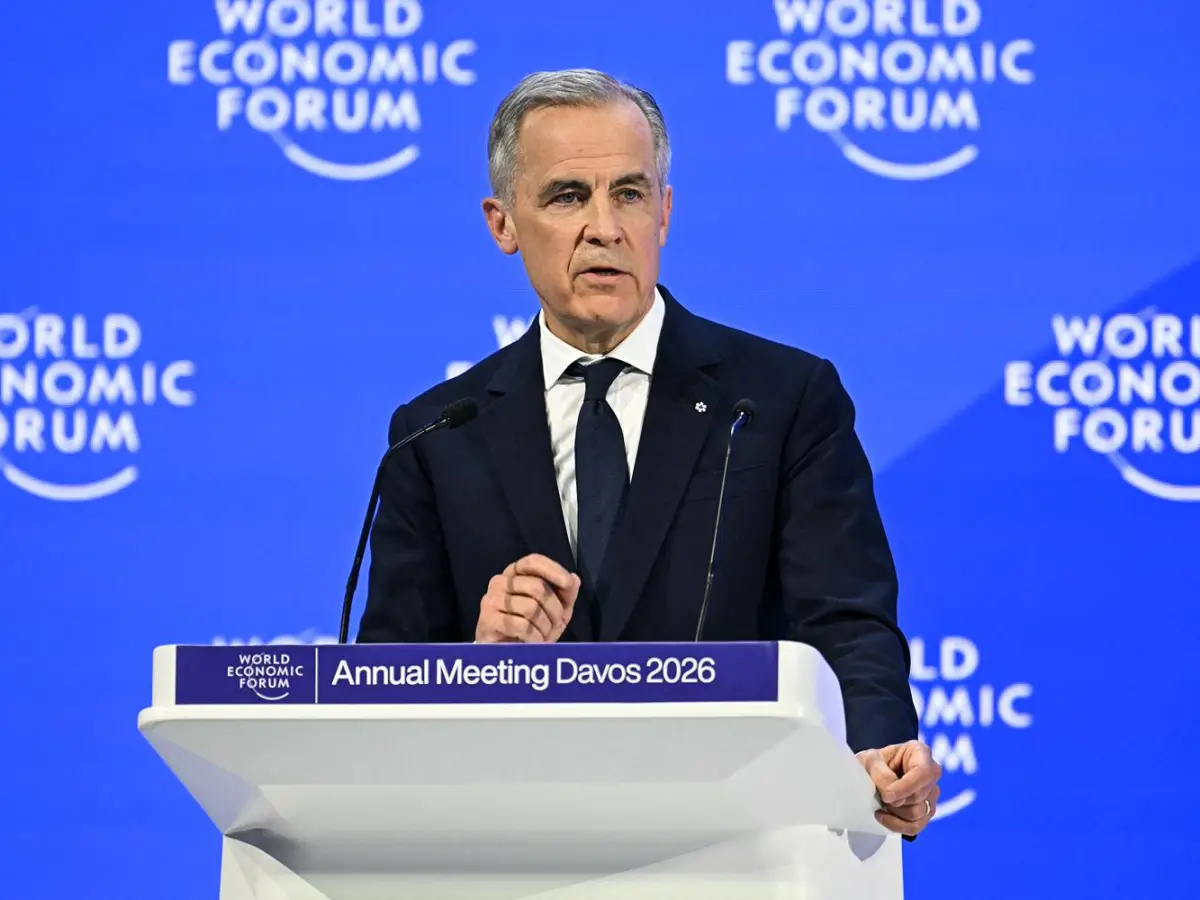
Prime Minister Mark Carney is hosting Canada’s first national Investment Summit, bringing together more than 300 investors, chief executives and business leaders from around the world as Ottawa seeks to unlock a new wave of investment in the Canadian economy.
Canada is presenting more than 160 potential projects to investors, with the federal government aiming to help catalyze as much as $1 trillion in investment over the next five years. Opportunities being promoted span energy, critical minerals, transportation, artificial intelligence, advanced manufacturing and major infrastructure.
Among the projects being highlighted are a proposed high-speed transportation connection between Edmonton and Calgary, the Ksi Lisims LNG project in northern British Columbia and a major expansion of the Port of Churchill. Carney has told business and political leaders that several agreements connected to the summit have already been signed, although the companies involved, specific projects and investment values have not yet been publicly disclosed.
The summit comes as Canada seeks to translate international investor interest into projects that are financed, approved and ultimately constructed. Carney’s broader pitch is that Canada can offer global investors a combination of abundant natural resources, a skilled workforce, technological expertise, political stability and access to international markets.
That effort has taken on greater urgency amid Canada’s continuing trade dispute with the United States. Ottawa is looking to attract more capital from Europe, Asia and the Middle East while reducing the Canadian economy’s exposure to any single trading partner. The success of the strategy, however, will depend on whether investment commitments ultimately translate into new mines, factories, transportation networks, energy infrastructure and Canadian jobs.
Ottawa is also offering greater tax certainty to companies considering major investments. Businesses prepared to commit at least $1 billion to Canada will receive priority access to the Canada Revenue Agency’s Advance Income Tax Rulings program. The process allows companies to obtain a binding determination on how federal tax law will apply to a proposed transaction before committing substantial capital.
The government says prioritizing these rulings will provide investors with greater certainty and help accelerate major projects. For companies considering multibillion-dollar investments, clarity over future tax treatment can reduce financial risk before final investment decisions are made.
However, tax certainty represents only one element of Canada’s investment challenge. Global investors are also expected to closely assess the speed and predictability of permitting, regulatory processes, environmental reviews and construction approvals. Ultimately, the government’s investment strategy will be measured not simply by announcements or commitments, but by how many proposed developments move into construction and operation.
One of the summit’s most notable political elements is the participation of former Conservative prime minister Stephen Harper, who is scheduled to deliver the closing address. Harper, who governed Canada from 2006 to 2015, pursued an economic agenda emphasizing international trade, investment and resource development and has maintained extensive global political and business connections since leaving office.
Harper’s involvement alongside a Liberal government also gives the summit a cross-partisan dimension. Major infrastructure, resource and energy developments can take years or even decades to complete, making long-term policy stability an important consideration for investors.
By including a former Conservative prime minister in one of his government’s signature economic initiatives, Carney is presenting the investment push as broader than a single government or political party. Amid economic uncertainty and strained trade relations with the United States, the message to global investors is that attracting capital and building major projects is being positioned as a long-term Canadian economic priority.
The central question now is whether Ottawa can convert its $1-trillion ambition into tangible investment. The ultimate test will be how many of the projects showcased at the summit secure financing, clear regulatory hurdles and move from proposals on paper to infrastructure, businesses and jobs on the ground.