




Leaders of the BRICS nations have concluded a major summit in New Delhi, using the gathering to demand a greater role for emerging economies in shaping the international system while also exposing the political divisions that continue to limit the expanded bloc’s ability to act with one voice.
India, China, Russia and other BRICS members used the summit to push for greater influence for the Global South in institutions historically dominated by Western powers. But disagreements over some of the world’s most consequential conflicts forced leaders to carefully balance competing interests in their final declaration.
On the Middle East, BRICS called for restraint but avoided directly condemning either U.S. and Israeli strikes against Iran or Iranian attacks on Gulf states. The cautious language reflected divisions within the organization itself. Iran is a BRICS member, as is the United Arab Emirates, which has been targeted during the conflict, while China and Russia have generally adopted stronger positions against Western actions.
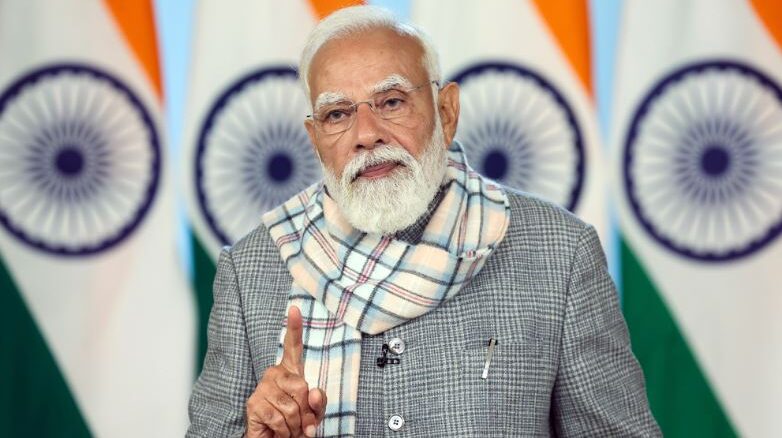
India, meanwhile, has sought to preserve close relationships with both Western countries and its BRICS partners. Prime Minister Narendra Modi emphasized that the organization should not be viewed simply as an anti-Western alliance, declaring that BRICS is “not against anyone” while arguing that developing and emerging economies deserve significantly greater influence over international decision-making.
That balancing act was evident throughout the summit. BRICS criticized unilateral tariffs and sanctions without directly naming the United States. On the war in Ukraine, leaders broadly endorsed dialogue and diplomacy without directly criticizing Russia. The bloc adopted stronger language on the Palestinian issue, opposing the forced displacement of Palestinians and reaffirming its support for Palestinian statehood and a two-state solution.
The summit highlighted the growing weight of BRICS in the international system. Its members collectively account for nearly half of the global population and around 40 per cent of world GDP, giving the organization substantial economic and demographic influence. Members are seeking greater representation and decision-making power in institutions including the International Monetary Fund, World Bank, World Trade Organization and United Nations.
But the New Delhi summit also demonstrated the central limitation facing an expanded BRICS. The organization is increasingly large enough to influence global debates, but its members have different strategic alliances, economic interests and foreign-policy priorities, making consensus on major geopolitical crises considerably more difficult.
For India, that tension also presents an opportunity. Modi’s message positioned BRICS less as a rival geopolitical camp to the West and more as a vehicle for countries of the Global South to increase their influence within a changing international system. His argument is that developing countries should move from being international “rule-takers” to becoming “rule-shapers.”
That distinction may represent the broader significance of the summit. The emerging global order is not necessarily dividing neatly between an Eastern bloc and a Western bloc. Instead, countries such as India and other middle powers are increasingly attempting to maintain relationships across competing geopolitical camps while seeking greater strategic independence.
The New Delhi summit therefore demonstrated both the strength and weakness of BRICS: its expanding economic and demographic power gives it a growing voice in global affairs, but the competing interests of its members continue to constrain how effectively that influence can be converted into unified action.