





By Ramona Singh (Associate Editor – Y Media)
Five weeks ago, the B.C. Conservatives had no permanent leader and a caucus that was falling apart. On Saturday they won a decisive majority, and a little-known MLA from the Cariboo is about to become premier.
David Eby called a snap election two years early to take advantage of a rival in chaos. Instead he ended nine years of NDP government and his own leadership.
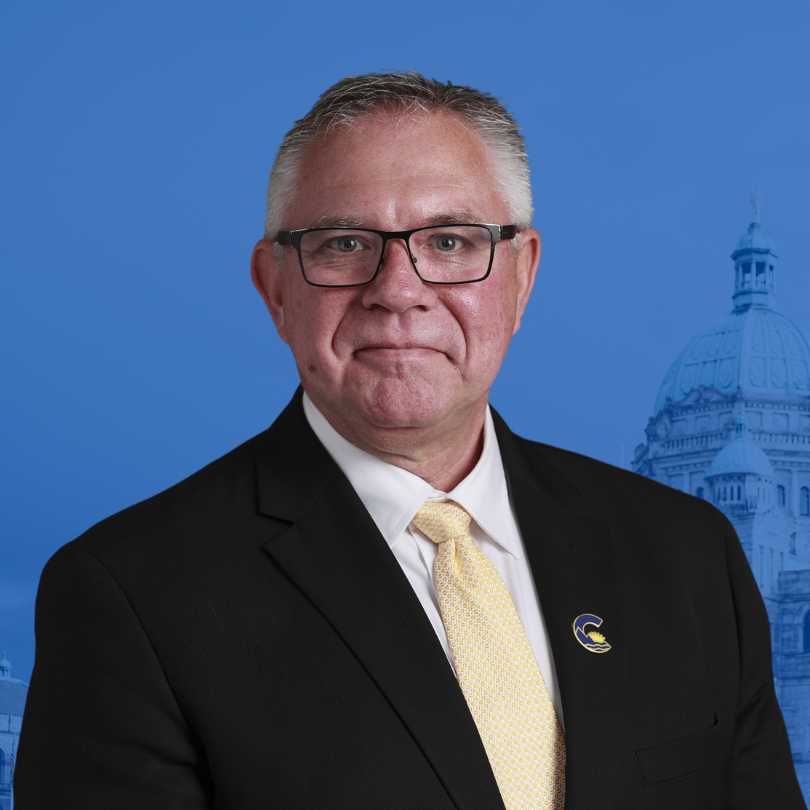
Lorne Doerkson, a former rodeo announcer and newspaper publisher, will lead British Columbia’s first Conservative government since 1928. He is also the first interim leader in Canadian history to win a general election.
He told a roaring crowd his government would “super-charge British Columbia.” The question now is how a party that nearly imploded in September holds together while it governs.
The numbers: bigger than anyone predicted
The Conservatives won 64 seats, up from 44 in 2024, while the NDP fell from 47 to 27 and the Greens held steady at two. A majority needs 47 of the 93 seats. Counting continues, and a final count is set for November. The Conservatives took about 48 per cent of the vote, the NDP 37 and the Greens 11.
The turnaround inside the Conservative caucus is the real shock. At the height of its infighting, the party was down to 24 MLAs, 20 fewer than it elected in 2024. It now has nearly three times that number.
How a party in freefall won
This summer, the B.C. Conservatives looked finished. Under leader Kerry-Lynne Findlay, 14 MLAs left caucus in a few weeks, some quitting and some pushed out. Five defectors announced a new party. Findlay expelled former leader John Rustad, former interim leader Trevor Halford and critic Claire Rattée after they called for her to go. The RCMP said it would look into claims she offered MLAs jobs in exchange for their resignations, which she called preposterous.
On Sept. 20, after just 113 days as leader, Findlay resigned. Doerkson was named interim leader within hours, with unanimous caucus backing. When the legislature was dissolved, the Conservatives were officially down to 29 seats.
Eby saw an opening. With a one-seat majority and a legislature he called stalled, he went to the polls on Sept. 22, citing the need for a stronger hand against U.S. tariffs.
It backfired almost immediately. Doerkson invited the expelled MLAs back, and 10 of the 13 who had left signed up to run again. Three days after the election call, an Angus Reid poll showed the Conservatives back in front. By the only televised debate on Oct. 14, the party had regrouped, and many voters saw the early election as a power grab.
Doerkson campaigned on expanding natural gas production, no tax increases and cutting the deficit. In his own riding of Cariboo-Chilcotin, he took 14,218 votes. The NDP runner-up had 3,123.
Eby’s exit
Eby has resigned as NDP leader. In a sombre concession speech on election night, he said he had called Doerkson to congratulate him and took the blame for the result: “I accept full responsibility for that outcome.”
He still holds his own seat, having narrowly won Vancouver-Point Grey. He remains premier until Doerkson is sworn in. The NDP now has to choose a new leader from opposition, its first time there in nearly a decade.
The verdict from inside his own movement was blunt. Former NDP leader Adrian Dix said the election call had been a mistake. The defeat was avoidable and will likely define Eby’s legacy, costing his party two years it was scheduled to have in power.
Doerkson’s day-one agenda
Doerkson has not yet been sworn in, but at his first news conference he laid out three early priorities.
On his first day as premier, Doerkson says, he will launch an independent review of the province’s finances. He points to a deficit of nearly $14 billion and eight credit-rating downgrades in three years. The NDP’s own September update forecast a deficit of $13.759 billion, $450 million worse than the spring budget. He has promised no new taxes and a personal income tax cut.
Doerkson says his first calls as premier will be to Prime Minister Mark Carney and Alberta Premier Danielle Smith to get the Pacific Link oil pipeline to the West Coast moving. Ottawa designated it a project of national interest earlier this month. Smith has already said she is excited to work with him on it.
The Declaration on the Rights of Indigenous Peoples Act was co-developed with First Nations. It requires B.C. to bring its laws in line with the UN declaration. Doerkson says it has caused more problems than it solved, pointing to court challenges and lost mining opportunities. He wants it gone as soon as possible. He is weighing a short fall sitting of the legislature, but expects repeal legislation in the spring. The Conservatives have not said what would replace it or what happens to agreements already signed under it.
The DRIPA promise has drawn immediate and fierce opposition. Grand Chief Stewart Phillip of the Union of B.C. Indian Chiefs called Doerkson’s view dead wrong and warned of a “battleground B.C.” The First Nations Leadership Council says the province is at a crossroads between conflict and reconciliation. First Nations Summit Chief Shana Thomas says no economic project can go ahead without First Nations involvement. Regional Chief Terry Teegee warns that without co-decision-making, future projects will likely be stalled and challenged in court. That is a direct risk to the pipeline and resource agenda Doerkson is selling.
On Monday Oct 26, two days after the election, Carney and most premiers met nearly 200 First Nations chiefs in Ottawa. It was the first such gathering since the Kelowna Accord talks of 2005. The premiers of B.C., Alberta and Quebec did not attend. Carney committed to a process to move Canada beyond the Indian Act, and announced more than $2.5 billion over five years for First Nations emergency preparedness and more than $630 million over four years for policing. He also opened talks on a First Nations sovereign wealth fund to help communities invest in major projects. Reviews were mixed: the B.C. Assembly of First Nations said the meeting fell short of its potential. So while Ottawa spoke the language of rights and partnership, B.C.’s incoming government is moving to repeal its own rights law.
Doerkson is still officially interim leader, and the party constitution bars interim leaders from running for the permanent job. Changing that takes a two-thirds vote of the membership. During the campaign, the board pledged to make him permanent leader if he became premier. Doerkson has brushed off the question, but some observers say his caucus remains divided and his support inside the party is untested.
Former premier Christy Clark, who backed Doerkson’s campaign, calls the province’s finances a huge mess. Cutting taxes, holding the line on new ones and taming a $14 billion deficit at the same time will be the hardest promise to keep. His first budget will show which one gives.
The Conservatives won the right to govern in a landslide. Whether they can govern as a united team, with First Nations at the table and the books in order, is a question five weeks of campaigning never had to answer.