





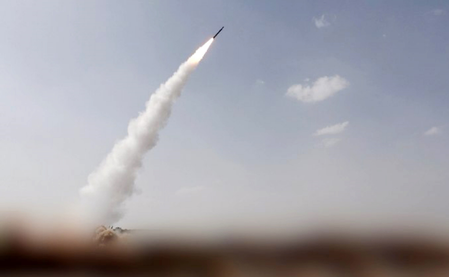
Iran announced Monday that it could reopen the Strait of Hormuz and resume nuclear negotiations with the United States within two days, provided Washington agrees to its conditions. The revised timeline marks a significant reduction from Tehran’s earlier proposal, which outlined a seven-day process.
The announcement comes amid heightened tensions across the Middle East, with renewed fighting in Yemen, Israeli military operations in the occupied West Bank and continued airstrikes in Gaza.
Iranian officials said reopening the strategically important waterway would require ships to follow a designated route agreed upon by Iran and Oman, with maritime traffic operating under Iranian supervision.
Tehran has also demanded that Washington lift its blockade of Iranian ports, remove sanctions on Iranian oil exports and agree to a ceasefire arrangement that includes Lebanon.
Iranian Foreign Ministry spokesperson Esmail Baghaei said the revised proposal remained the foundation for indirect negotiations with the United States through international mediators.
He described the shorter implementation period as evidence of Tehran’s willingness to pursue a diplomatic resolution. However, Iranian authorities have not indicated any changes to their underlying demands, and Washington has not confirmed whether it would accept the proposal.
Iran’s top diplomat expressed hope Sunday that the United States would prioritize diplomacy over military action.
U.S. President Donald Trump has continued to send mixed signals, alternating between support for negotiations and warnings of extensive military strikes against Iran.
Meanwhile, violence in Yemen has intensified, forcing hundreds of thousands of civilians to flee their homes.
The Houthi-run health ministry reported Monday that an explosion struck a crowded market in Taiz province in southwestern Yemen, killing three people, including two children, and injuring eight others.
Ministry spokesperson Anees al-Asbahi accused Saudi Arabia of responsibility for the attack. However, the Associated Press said it could not independently verify the allegations.
The incident occurred amid renewed clashes between the Iran-backed Houthi movement and Saudi-supported Yemeni government forces, effectively ending a four-year truce and worsening the country’s humanitarian crisis.
According to the United Nations’ International Organization for Migration (IOM), more than 300,000 people have been displaced by the latest fighting.
Many families have fled toward the southern city of Aden, while Taiz continues to receive displaced residents. Humanitarian organizations have warned that limited access to conflict-affected areas is making it increasingly difficult to provide food, shelter and essential assistance.
IOM Yemen mission chief Abdusattor Esoev said families already affected by years of conflict are once again being forced to abandon their homes, often leaving behind nearly all their belongings.
In a separate diplomatic development, China announced plans to dispatch a special envoy to Iran, Oman and Saudi Arabia in early to mid-November to help reduce regional tensions.
Chinese Foreign Ministry spokesperson Mao Ning said the mission would focus on promoting dialogue and strengthening stability across the Gulf.
During a meeting with Oman’s Sultan Haitham bin Tariq Al Said on Monday, Chinese President Xi Jinping emphasized that the Gulf should not become a battleground for competition among major global powers.
Beijing’s diplomatic initiative comes as China seeks to expand its regional influence while safeguarding energy supplies from the oil-rich Gulf states.
Elsewhere, the Israeli military announced Monday that it had completed a major operation in Hebron in the occupied West Bank following a shooting last month that killed two Israeli soldiers.
The military said its forces demolished the homes of two Palestinian gunmen suspected of carrying out the attack and seized weapons and vehicles it described as illegal.
The operation displaced hundreds of Palestinian residents, many of whom began returning to their neighbourhoods Monday as Israeli troops partially withdrew.
Residents in Deir Bahha reported extensive damage to homes and property following the military raids.
Explosives specialists inspected the area for potentially unexploded devices, while returning families expressed concerns about their safety and the psychological impact of the operation on children.
One resident, Wael Shawar, described discovering broken doors and shattered windows upon returning home. Another resident, Tamara Obei, said uncertainty about possible explosives and damage had left families fearful of returning.
Meanwhile, Israeli airstrikes in southern Gaza killed two men early Monday, according to Nasser Hospital.
Hospital officials said one victim was killed inside his home, while the second died when a strike hit a tent.
The Israeli military did not immediately respond to requests for comment on the incidents.
Although major hostilities between Israel and Hamas largely subsided following the October 2025 ceasefire, Israeli forces have continued conducting frequent strikes in Gaza.
Israel maintains that its operations target militants and accuses Hamas of using civilians as human shields. However, the strikes have also resulted in civilian casualties, including women and children.
Gaza’s Health Ministry reported that approximately 1,580 Palestinians have been killed since the ceasefire took effect, raising the overall death toll to more than 74,500.
The ministry, which operates under the Hamas-run administration, does not distinguish between civilian and militant deaths in its figures.
The latest developments highlight the continuing instability across the Middle East, even as diplomatic efforts to reduce tensions between Iran and the United States gain renewed attention.