





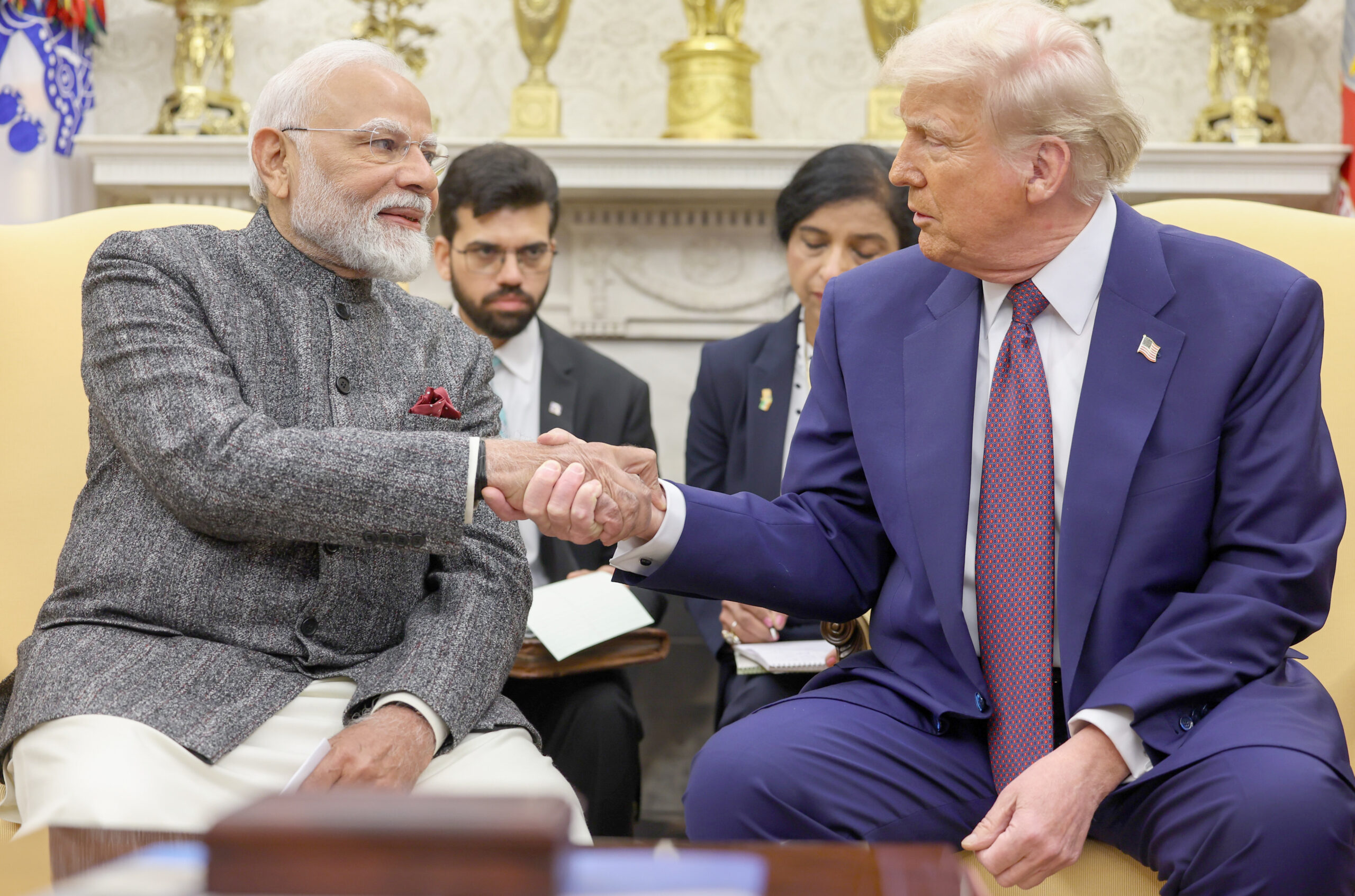
U.S. President Donald Trump met with Indian Prime Minister Narendra Modi, Australian Prime Minister Anthony Albanese and Japanese Prime Minister Sanae Takaichi in Manila, Philippines, on Tuesday, November 17, for the first Quad Leaders’ Summit in more than two years. The four countries announced new agreements covering critical minerals, maritime security and artificial intelligence, reaffirming their commitment to strengthening cooperation across the Indo-Pacific region.
A central outcome of the meeting was an agreement to strengthen critical mineral and rare earth supply chains, with the four nations seeking to reduce dependence on concentrated foreign suppliers. The arrangements aim to improve access to materials essential for advanced manufacturing, defence equipment, electric vehicles and emerging technologies. Trump said the United States intended to significantly expand domestic rare earth production within the next 10 months.
The leaders also agreed to deepen defence and maritime security cooperation through additional joint military exercises involving maritime patrol aircraft. The initiative builds on existing regional security activities, including the Malabar naval exercises, and is intended to improve coordination among the four countries in monitoring and responding to maritime security challenges.
Technology cooperation featured prominently in the discussions, with the Quad announcing a new Superintelligence Accelerator supported by more than $85 million in investment. The initiative is designed to expand access to trusted artificial intelligence technologies and support the development of advanced AI ecosystems across the Indo-Pacific. It also seeks to encourage technological collaboration among the four partner countries.
In a joint statement following the summit, the leaders expressed serious concerns about economic coercion and arbitrary export restrictions, emphasizing the importance of resilient supply chains and transparent international trade. Although the statement did not explicitly identify China in every area of concern, the discussions reflected broader regional anxieties about dependence on dominant suppliers of strategic materials.
Modi welcomed the renewed engagement, describing the Quad as a constructive and trusted partnership capable of delivering practical solutions to regional challenges. Albanese also emphasized the importance of cooperation among the four democracies, highlighting their shared interest in maintaining regional stability and strengthening economic security.
The summit marked a renewed emphasis on the Quad’s strategic role following a prolonged gap between leaders’ meetings. Originally established as a diplomatic and security partnership among Australia, India, Japan and the United States, the grouping has increasingly expanded its agenda to include technology, infrastructure, economic resilience and supply chain security.
The latest agreements signal the four governments’ intention to strengthen their collective capabilities in critical industries while maintaining cooperation on regional security. Further implementation details, including the scope of the minerals agreements, planned military exercises and allocation of AI funding, are expected to emerge as the initiatives advance.