





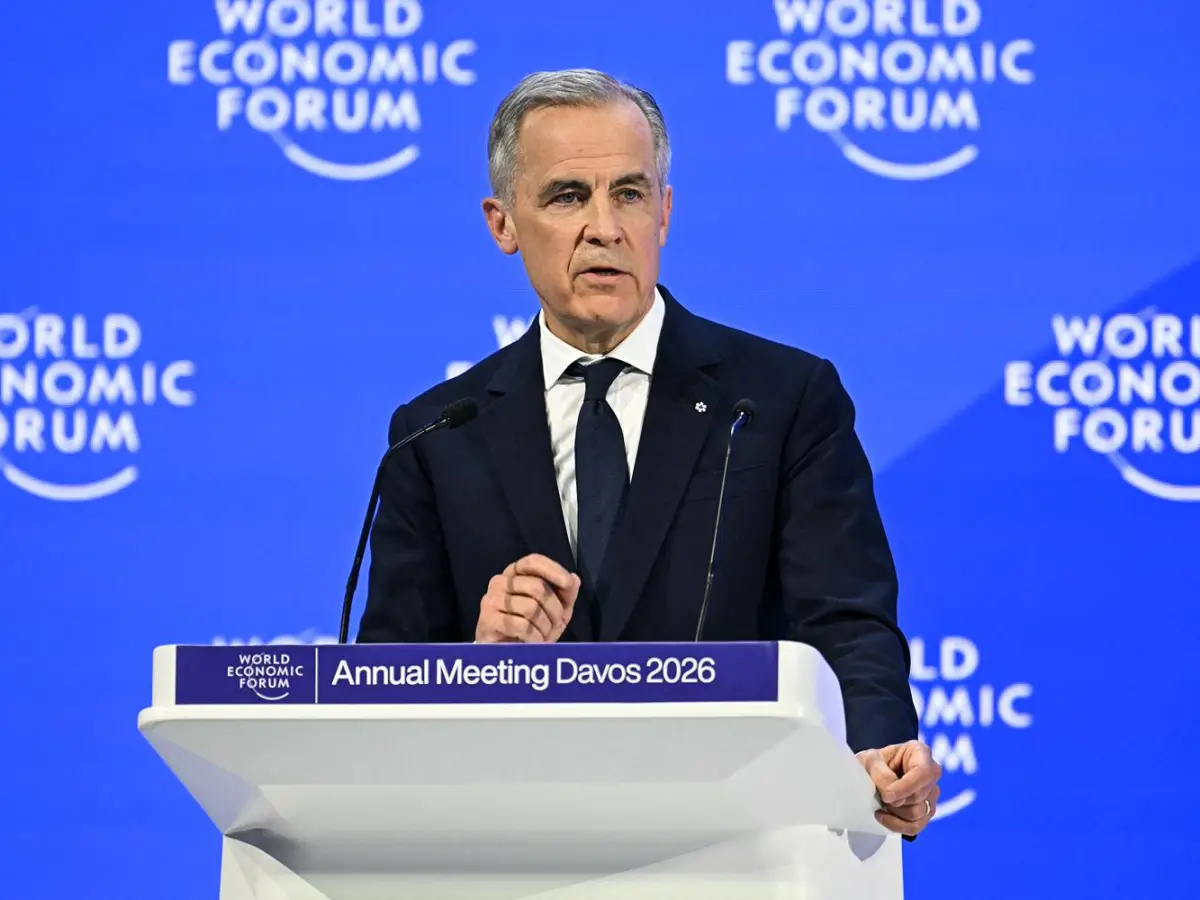
Canada has formally applied to join the United Kingdom-led Joint Expeditionary Force, a 10-country rapid-response military partnership focused heavily on security in Northern Europe, the North Atlantic and the Arctic, as Prime Minister Mark Carney’s government moves to deepen Canada’s defence relationships with European allies.
Carney announced Canada’s formal application on September 16 during a meeting with British Prime Minister Andy Burnham in Liverpool. According to the Prime Minister’s Office, Burnham’s government supports Canadian participation in the Joint Expeditionary Force, commonly known as the JEF. Canada has applied for membership but has not yet formally joined the group.
The JEF is not an organization of the European Union. It is a separate UK-led military partnership whose existing members are Britain, Denmark, Estonia, Finland, Iceland, Latvia, Lithuania, the Netherlands, Norway and Sweden. All 10 are NATO members. The coalition is designed to allow participating countries to deploy and coordinate military forces rapidly, including in situations where the entire NATO alliance may not be involved. Canada’s application would add another NATO member with territory and strategic interests in the North Atlantic and Arctic.
The application comes as the Carney government seeks to expand Canada’s military relationships beyond its traditionally dominant defence relationship with the United States. Reuters reported that Ottawa is seeking closer military cooperation with European countries as part of an effort to reduce its reliance on the U.S. Canada would nevertheless remain deeply integrated with the United States through NATO and continental defence arrangements. Carleton University international-relations professor Philippe Lagassé told Reuters that Canada’s military and intelligence relationship with the United States cannot simply be severed because the two countries share a continental defence relationship.
The Arctic is a significant part of the calculation. Canada’s vast northern territory places it within the broader geographic security environment covered by the JEF, whose members include Arctic and northern European countries such as Denmark, Iceland, Finland, Norway and Sweden. Canada’s government says joining the force would reinforce military interoperability with its partners and strengthen collective security.
The JEF application is also one part of a series of concrete Canadian moves toward greater defence integration with Europe. During Carney’s September 16 meeting with Burnham, the two leaders discussed potential defence-industrial cooperation through the Global Combat Air Programme, or GCAP. Canada became an observer in GCAP in July 2026. The multinational program is developing a next-generation combat-air system. Canada and Britain are also working toward a permanent arrangement to modernize the British Army Training Unit Suffield at Canadian Forces Base Suffield in Alberta through the BATUS Future Project, with the Canadian government saying the facility would support the development and testing of new military equipment and technology.
Canada has simultaneously been building a separate defence relationship with the European Union. At the Canada-EU Summit in Brussels in June 2025, the two sides launched the New EU-Canada Strategic Partnership of the Future and signed an EU-Canada Security and Defence Partnership. The latter is a non-legally binding framework bringing existing security and defence cooperation between Canada and EU member states under a common political structure.
Canada took another major step in February 2026 when it became the first non-European country to join the EU’s Security Action for Europe, or SAFE, initiative. SAFE forms part of the EU’s Readiness 2030 defence plans and gives Canada greater access to European defence procurement opportunities. In June, Canada announced its first procurement secured through the initiative: Montréal-based Marconi Technologies was selected to build Canadian-made ORION tactical radios for Poland’s Cyber Command.
Those developments are unfolding alongside an even broader discussion about Canada’s future relationship with the European Union. During Carney’s September visit to Strasbourg, European Commission President Ursula von der Leyen proposed opening the door for Canada to become the EU’s first “associate member.” No established EU legal category currently exists for such a status, and the proposal does not mean Canada is joining the European Union. The precise rights, obligations and institutional structure of any Canadian associate arrangement would still have to be negotiated.
Carney has proposed what his government calls a deeper and more integrated Canada-EU partnership covering defence industries, critical minerals, energy, artificial intelligence, computing, financial services and greater opportunities for Canadians and Europeans to live, work and study across the Atlantic. The Prime Minister’s Office says the EU was Canada’s second-largest trading partner for goods and services in 2025, with bilateral trade worth approximately $178 billion. EU foreign direct investment stock in Canada stood at an estimated $217 billion, while Canadian direct investment in the EU totalled approximately $315 billion.
However, Canada’s push toward Europe does not eliminate the country’s extensive economic and military links with the United States. Reuters reported that Canadian and European officials face practical limits in how far the relationship can be transformed, particularly because Canada and Europe themselves remain heavily connected to U.S. defence capabilities. Canada also continues to participate in continental defence with Washington.
The timing also coincides with a deterioration in Canada-U.S. relations and Ottawa’s effort to diversify its international partnerships. Carney’s government has set a goal of doubling Canada’s non-U.S. trade over the next decade, while pursuing deeper European cooperation in trade, defence and digital security. Canada’s existing Comprehensive Economic and Trade Agreement with the EU already provides an economic foundation for that effort, although Reuters reported this week that 10 EU countries have still not ratified CETA.
Canada’s JEF application should therefore be distinguished from the EU “associate member” proposal. The JEF is a UK-led military partnership composed of 10 NATO countries, and Canada has formally applied to become a member. The European Union is a separate 27-member political and economic bloc with which Canada is negotiating a potentially deeper relationship. The two developments are occurring at the same time and form part of Ottawa’s broader effort to build stronger European economic, technological and defence links, but they involve different institutions and separate processes.