





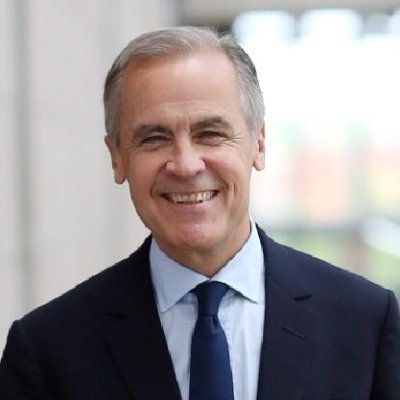
European Commission President Ursula von der Leyen has proposed taking Canada’s relationship with the European Union to an unprecedented level, saying she wants to open the door for Canada to become what she called the bloc’s first “associate member.”
Prime Minister Mark Carney was seated in the front row of the European Parliament in Strasbourg, France, on Wednesday as von der Leyen delivered her State of the Union address. She called on Canada and Europe to “urgently reimagine” their relationship and move beyond their existing free-trade partnership.
Von der Leyen said Europe wants its relationship with Canada to reach the “highest level possible,” with expanded cooperation spanning trade, defence and people-to-people ties. Carney is visiting France this week as part of his government’s broader effort to strengthen Canada’s economic and strategic relationships with Europe.
The proposal comes amid growing discussion about what a substantially deeper Canada-EU relationship could look like. Carney has already ruled out Canada becoming a full member of the European Union, saying instead that Ottawa is pursuing a “unique alliance” with the bloc. He is scheduled to address the European Parliament on Thursday.
Von der Leyen outlined several areas where the relationship could expand, including the Arctic, energy, critical minerals and batteries. She described the proposed partnership as an “alliance for the future,” pointing to existing cooperation between Canada and Europe on Ukraine, defence, artificial intelligence, climate change, raw materials and supply chains.
However, the term “associate member” does not currently represent a formal legal category within the European Union. EU rules also specify that only European countries can apply for membership, meaning any new arrangement with Canada would have to be separately defined.
Canada’s incoming ambassador to the EU, Jonathan Wilkinson, played down the importance of the terminology, saying the two sides remain “a ways away” from deciding how the relationship should ultimately be described. He said Ottawa’s immediate focus is on achieving concrete results before determining what label should be attached to the partnership. Wilkinson reiterated that Canada is not seeking EU membership.
The Prime Minister’s Office similarly avoided endorsing the “associate member” terminology. Instead, it welcomed von der Leyen’s broader proposal to move beyond the existing free-trade relationship toward an alliance for the future, describing the initiative as a unique approach that Canada and Europe would define together.
Conservative Leader Pierre Poilievre criticized the mixed messaging surrounding the proposal, saying Conservatives support strong free-trade and NATO defence relationships with Europe but oppose the application of EU taxes, laws or open-border immigration policies to Canada.
Carney received a warm reception in Strasbourg, including a standing ovation after being introduced in the European Parliament. Several European political figures welcomed the prospect of closer relations, reflecting growing interest in strengthening ties between Canada and Europe.
The discussions represent a potentially significant development in Canada’s foreign policy as Ottawa looks to diversify its economic and strategic relationships. While neither side has settled on the structure or name of the proposed arrangement, von der Leyen’s remarks signal that Brussels is prepared to consider a Canada-EU relationship extending considerably beyond the traditional boundaries of a free-trade agreement.