





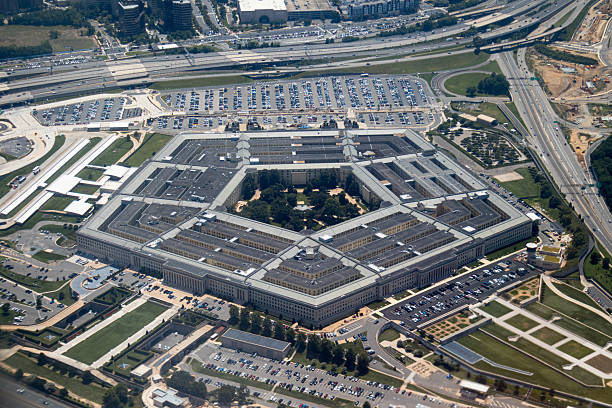

The Pentagon issued a sharp rebuke of Canada’s military readiness and defence spending on Monday, November 23, 2026, questioning Ottawa’s ability to fulfil its commitments to the North American Aerospace Defense Command (NORAD) and the North Atlantic Treaty Organization (NATO). In a 700-word fact sheet, the U.S. Department of Defense urged Canada to “get serious and focused” about its military capabilities, highlighting equipment shortages, personnel challenges and uncertainty surrounding long-term defence investments.
According to the figures cited in the Pentagon’s assessment, only 41.9% of the Royal Canadian Air Force’s fleet and 53.9% of the Royal Canadian Navy’s fleet were serviceable in the 2025–26 fiscal year, while the Canadian Army’s operational readiness stood at 48%. Canada also lacked dedicated airborne early warning and control aircraft, while typically only one of its four Victoria-class submarines was seaworthy at any given time.
National Defence’s own performance figures indicate that 61% of Canadian Armed Forces elements were prepared for operations in accordance with assigned readiness targets. Ottawa aims to increase that figure to 90% by 2032, although equipment maintenance, recruitment and procurement delays remain significant challenges. AP News+1
The Pentagon also questioned Canada’s ability to meet NATO’s new defence spending commitment of 5% of GDP by 2035, agreed upon at the June 2025 NATO summit in The Hague. The commitment comprises 3.5% for core military expenditure and 1.5% for broader security and infrastructure investments. Washington maintains that Ottawa has not presented a fully funded plan to achieve the target.
Canada reached NATO’s previous 2% core defence spending benchmark in 2025–26, investing $65.9 billion, up approximately 50% from $43.9 billion the previous fiscal year. According to Budget 2026, annual core defence spending is projected to reach $75.1 billion in 2026–27, $89 billion in 2027–28 and $99.2 billion by 2030–31. Combined defence and security expenditure is projected to reach 4.1% of GDP in 2027–28 and remain at that level through 2030–31. Total expenditure across both categories is projected to exceed $700 billion over five years. Budget 2026+2
Another major point of contention is Prime Minister Mark Carney’s review of Canada’s planned acquisition of 88 American-made Lockheed Martin F-35 fighter jets. Ottawa has been exploring alternative procurement options, including Sweden’s Saab Gripen, amid efforts to strengthen domestic manufacturing, create Canadian jobs and diversify military supply chains. The Pentagon warned that operating two different fighter fleets could intensify personnel shortages, increase logistical demands and complicate joint continental defence operations.
Carney has previously noted that approximately 75% of Canada’s defence capital expenditure goes to the United States, arguing that greater procurement diversification would strengthen Canada’s industrial capacity and economic sovereignty. Ottawa is also pursuing the acquisition of up to 12 new submarines to replace its aging fleet of four Victoria-class vessels. Euronews+1
The dispute comes despite Canada’s existing $38.6-billion, 20-year NORAD modernization program, initially announced in June 2022. The initiative includes $6.96 billion for surveillance modernization and $4.13 billion for command, control and communications upgrades. In March 2026, Carney also announced more than $35 billion in investments supporting Arctic infrastructure and northern defence capabilities, including $32 billion for upgrades to military operating facilities. Canada+1
The Pentagon’s criticism follows reports that U.S. Defense Secretary Pete Hegseth issued a directive restricting certain military engagements with Canada, alongside the suspension of a bilateral defence advisory body. However, Republican Senator Mike Rounds has indicated that the restrictions are not expected to interfere with routine joint operations or intelligence sharing. Canadian Defence Minister David McGuinty has similarly maintained that operational cooperation continues.
Canada and the United States have jointly operated NORAD since 1958, while both countries were among NATO’s 12 founding members in 1949. Their longstanding security partnership encompasses continental surveillance, aerospace defence, military training and intelligence sharing through the Five Eyes alliance.
The latest disagreement adds to broader tensions between Ottawa and Washington over tariffs, trade negotiations, Canadian sovereignty and military procurement. While the Carney government maintains that its spending plans represent a substantial rebuilding of Canada’s military capabilities, the Pentagon continues to question whether Ottawa will translate its financial commitments into operational readiness quickly enough to meet its alliance obligations.