





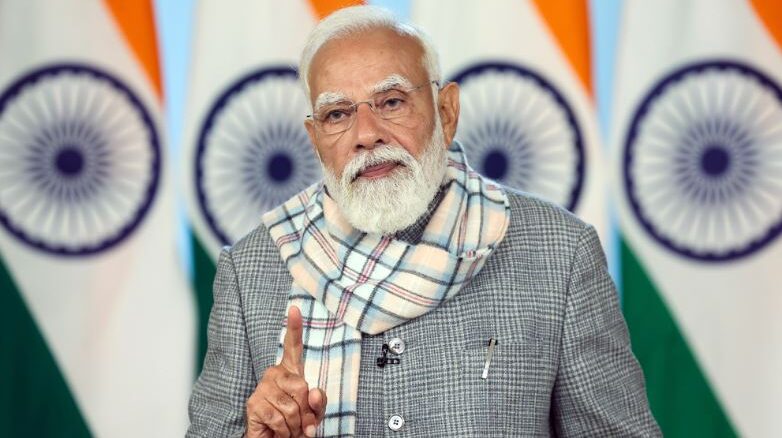
Chinese President Xi Jinping and Indian Prime Minister Narendra Modi are expected to hold closely watched talks during the BRICS summit in India, with their disputed Himalayan border and a widening trade imbalance likely to dominate discussions.
Xi’s attendance marks his first visit to India since 2019 and comes as Asia’s two largest economies cautiously rebuild relations following the deadly border clashes of 2020.
The meeting is expected to provide an important test of whether the recent diplomatic thaw can develop into a more durable improvement in India-China relations.
Border dispute remains major obstacle
Relations between India and China deteriorated sharply following the 2020 border confrontation, although the two governments have taken several steps over the past year to restore communication and normalize exchanges.
Chinese Foreign Minister Wang Yi and Indian National Security Advisor Ajit Doval held talks in August and welcomed progress in restoring cross-border and people-to-people ties, including border trade and pilgrimages through Himalayan passes.
Direct flights between India and China have also resumed, while New Delhi has eased some restrictions involving Chinese investment.
Despite those developments, the unresolved border remains a major source of distrust.
Recent reports of tensions involving access to Indian Army patrol points and alleged Chinese encroachment in Arunachal Pradesh have underscored the limits of the diplomatic reset.
The border dispute stretches back decades and led India and China to war in 1962.
India balances China ties amid tensions with U.S.
The Modi-Xi meeting also comes as New Delhi navigates strained relations with the second Trump administration over trade and tariffs.
India has increasingly emphasized what analysts describe as strategic hedging — strengthening relationships with multiple major powers rather than becoming dependent on any single geopolitical bloc.
Modi and Xi recently met on the sidelines of the Shanghai Cooperation Organisation summit in Kyrgyzstan, where they joined Russian President Vladimir Putin and other leaders in signing the Bishkek Declaration condemning military attacks against Iran without specifically naming the United States.
India is expected to use the BRICS summit to reinforce its commitment to a multipolar foreign policy while continuing to strengthen economic and strategic relationships elsewhere.
India’s record trade deficit with China in spotlight
Economic relations are expected to be another major focus of the Modi-Xi talks.
China remains India’s largest trading partner, with bilateral trade reaching a record $151.1 billion in the year ending March 2026.
However, India’s trade deficit with China also climbed to a record $112.16 billion, up from $99.21 billion.
New Delhi is expected to push for greater access to Chinese markets as it seeks to reduce the imbalance.
India remains heavily dependent on Chinese products and components in several strategically important industries. Its expanding green-energy sector, for example, relies significantly on Chinese battery supplies.
Rare earths and other critical materials have also emerged as a concern as governments increasingly view control over strategic supply chains as a national-security issue.
At the same time, India has imposed restrictions on some Chinese products in industries where domestic manufacturers have become more competitive, including aluminum foil and electrical steel.
Technology and investment remain sensitive
Manufacturing is another source of competition between the two Asian powers.
India has emerged as an increasingly important production centre for smartphones as companies such as Apple diversify parts of their manufacturing operations away from China. The Indian government says the country is now the world’s second-largest mobile-phone manufacturer.
Beijing, meanwhile, remains cautious about allowing technology, equipment and expertise to move to India in ways that could weaken China’s position in global manufacturing supply chains.
Any expansion of Chinese investment in India is therefore expected to proceed gradually.
While additional investment could benefit both economies, analysts expect New Delhi to maintain safeguards around strategically sensitive sectors, with broader liberalization remaining closely connected to developments in the political and security relationship.
Xi is reportedly travelling to India with a delegation of about 400 officials, more than twice the size of the delegation accompanying him during his 2019 visit.
The scale of the delegation and the anticipated Modi-Xi talks underline the significance of the summit. But despite improving diplomatic contacts, the border dispute, India’s enormous trade deficit and continuing strategic competition mean the relationship remains defined as much by caution as by cooperation.