





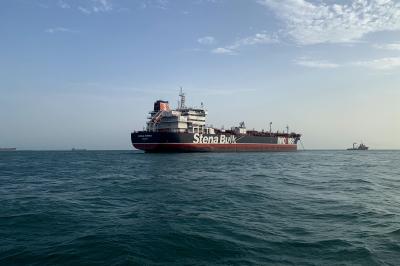
The strategically vital Strait of Hormuz has been declared fully open to commercial traffic, offering a potential easing of global energy tensions as a fragile ceasefire holds in Lebanon.
U.S. President Donald Trump said on social media that Iran had confirmed the passage was “fully open and ready for full passage.” Shortly before, Iran’s Foreign Minister Abbas Araghchi announced that all commercial vessels could once again transit the waterway, in line with the ongoing ceasefire.
It remains unclear how the reopening aligns with the previously announced U.S. blockade of Iranian ports, leaving questions over enforcement and long-term stability.
The development comes as a 10-day truce between Israel and Hezbollah appears to be holding, raising cautious hopes for a broader de-escalation in a conflict that has shaken the region for weeks.
Celebrations broke out in Beirut as the ceasefire took effect, with residents firing into the air and displaced families beginning to return home despite warnings from officials about potential risks.
However, tensions remain high. Israel has indicated it will maintain troops in parts of southern Lebanon, including a buffer zone extending several kilometres beyond its border, and has warned that many areas may remain unsafe for returning civilians.
Israeli Prime Minister Benjamin Netanyahu said the ceasefire was agreed to advance diplomatic efforts but confirmed that Israeli forces would not withdraw. Defence Minister Israel Katz echoed that stance, emphasizing that military objectives in the region are not yet complete.
Meanwhile, United Nations peacekeepers reported no airstrikes overnight but accused Israel of continued airspace violations and artillery activity in southern Lebanon.
The ceasefire is seen as a critical step toward a broader agreement involving Iran, the United States and Israel. Diplomats say negotiations are now focused on key sticking points, including Iran’s nuclear program, long-term access to the Strait of Hormuz, and compensation for war-related damages.
The conflict has already taken a heavy toll, with thousands killed across Iran, Lebanon and Israel, along with casualties among U.S. service members and civilians in Gulf states.
While falling oil prices signal cautious optimism, global energy officials warn that the situation remains volatile and dependent on whether the ceasefire holds and diplomatic efforts progress.
For now, the reopening of one of the world’s most critical energy corridors offers temporary relief — but the path to lasting stability remains uncertain.