




A surprising presence at Canada’s inaugural Investment Summit in Toronto, held September 15–16, 2026 and hosted by Prime Minister Mark Carney, was former Conservative PM Stephen Harper, who delivered the closing remarks. Harper and former Liberal PM Jean Chrétien bookended the two-day event, lending Carney’s pitch a rare bipartisan stamp of approval — with Harper notably backing Carney’s decision to walk away from a proposed deal with the United States.
The summit opened with Bell’s planned $50-billion data centre expansion in Saskatchewan, billed as one of the largest private-sector investments in Canadian history. Ontario Premier Doug Ford said invitees came from Kuwait, Malaysia, the Netherlands, Singapore, Qatar, Norway, Japan and Australia. In total, more than 160 projects were put on the table, alongside a $36-billion expansion of a major investment tax write-off and a new one-year deadline for government decisions on project approvals — all designed to draw in capital.
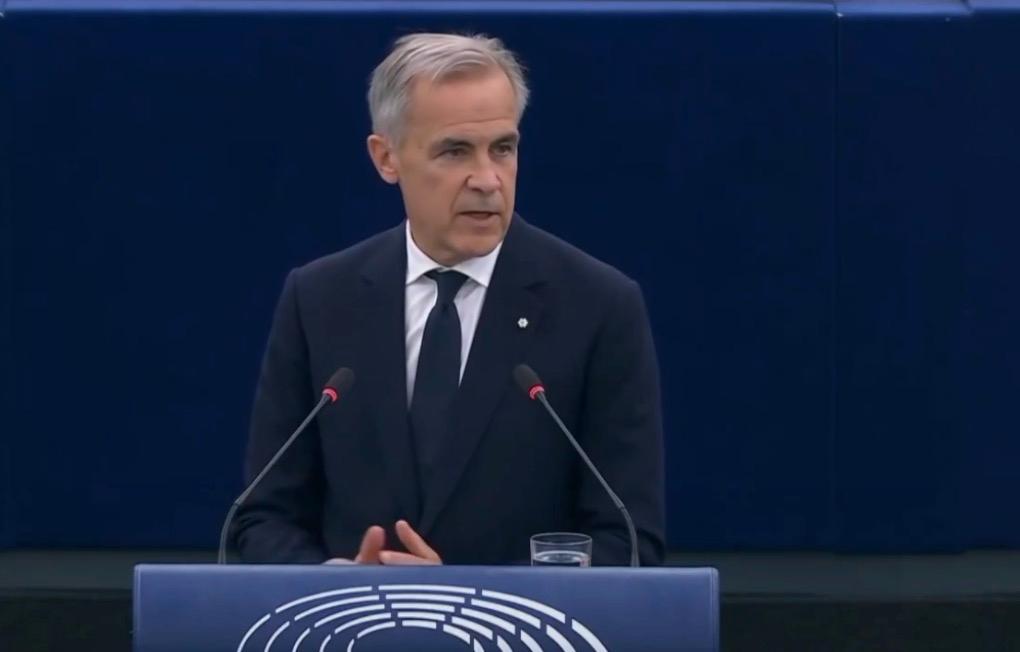
Unity was the throughline of Carney’s messaging. At the summit’s welcome reception, he argued the world is looking at Canada differently, and that Canada should do the same: “We have what the world wants: the energy, the resources, the talent, the technology and the capital.” In an apparent jab at U.S. President Donald Trump, he added that Canada’s greatest strength “cannot be found on any balance sheet: trust.”
His broader framing pushed past partisanship altogether. People in the room, he said, “may not always agree, nor do they need to,” but they align on “where Canada is going” — declaring “a new consensus from Iqaluit to Victoria to Quebec City and St. John’s.” The message was clear: this was pitched not as a Liberal initiative but as a national project, above party lines.
That framing extends to the one-year approval deadline, which marks a real shift in how government itself operates — constraining how long regulators can take on major project decisions. Critics might argue this has less to do with privatization and more to do with the state pre-committing to move faster on behalf of investors, whatever the political optics.
The summit faced political contest from labour unions, Indigenous groups and climate and housing activists staged protests outside, and the fact that the event itself was closed to the public and media fuelled accusations of “deals behind closed doors.”
Wet’suwet’en Hereditary Chief Na’Moks argued that Carney is using fear of predatory U.S. trade policy to manufacture public support for major projects, and insisted no project will proceed without the backing of Canadians and Indigenous communities alike. Dogwood B.C. spokesperson Kai Nagata went further, claiming that every piece of the country Carney sells to American billionaires brings Canada closer to U.S. annexation — a claim that remains unsubstantiated.
At the same time, the underlying pressures driving the summit are real: the investment gap and U.S. tariff threats are well-documented economic conditions, and the resulting 160-plus project list is a concrete, tangible outcome rather than just rhetoric.
Among the summit’s most consequential announcements was Carney’s plan to open Canada’s four largest airports — Toronto-Pearson, Montreal-Trudeau, Calgary and Vancouver — to private investment. Crucially, this stops short of a sale: “the government of Canada will retain ownership of the underlying land and assets,” Carney said, “but we will unlock their true value by bringing in new capital and expertise to their operations and their growth.”
The four airports currently operate under a not-for-profit model, with local authorities managing federally owned land through long-term leases. Both the 2025 federal budget and this spring’s economic statement had already signalled the government’s intent to explore alternative ownership structures. Notably, airports weren’t part of the summit’s main deal book — they were treated as a separate announcement from the 160-plus showcased projects.
Carney framed the move as a win for travellers, promising a “better passenger experience,” and noted that Canadian pension funds already successfully invest in and manage airports internationally.
Ahead of the summit, the Canadian Labour Congress released a report warning that privatizing Canadian airports could drive up costs for travellers, increase pressure on airport workers, and erode long-term public value. NDP Leader Avi Lewis was blunter still: “We should be making air travel more affordable, protecting good airport jobs and improving public infrastructure, not turning critical public assets into decades-long money printing machines for CEOs and their shareholders.”
Adding to the uncertainty, the federal government has yet to specify what kind of ownership structure investors would actually receive — whether minority stakes, subleases, or something closer to full operating control. That ambiguity has drawn scrutiny from both Conservative Leader Pierre Poilievre and pension-fund observers. Complicating matters further, Transport Canada outlined possible mechanisms back in March — including commercial subleases and minority stakes in share-capital subsidiaries — but some pension officials have said only a controlling stake would meet their investment criteria. In other words, the structure currently on offer may not even satisfy the very investors it’s meant to attract.
Harper and Chrétien Flank Carney as Canada Woos Global Capital — and Faces Pushback at Home


- Advertisment -