




Canada and the European Union wrapped up a two-day summit in Montreal on Friday by launching what both sides are calling a turning point in their relationship: an “Alliance for the Future” meant to bind the two economies, their defence industries and their technology sectors more tightly together.
Prime Minister Mark Carney hosted European Commission President Ursula von der Leyen and European Council President António Costa for the 21st EU-Canada summit. The leaders announced more than twenty new measures, from a first-of-its-kind digital trade agreement to billions of dollars in defence financing, and released a seven-page joint statement.
That statement goes beyond trade. It covers Arctic and border security, calls for reforming the World Trade Organization rather than replacing it, and commits both sides to doing more on climate change and biodiversity loss.
A new kind of membership
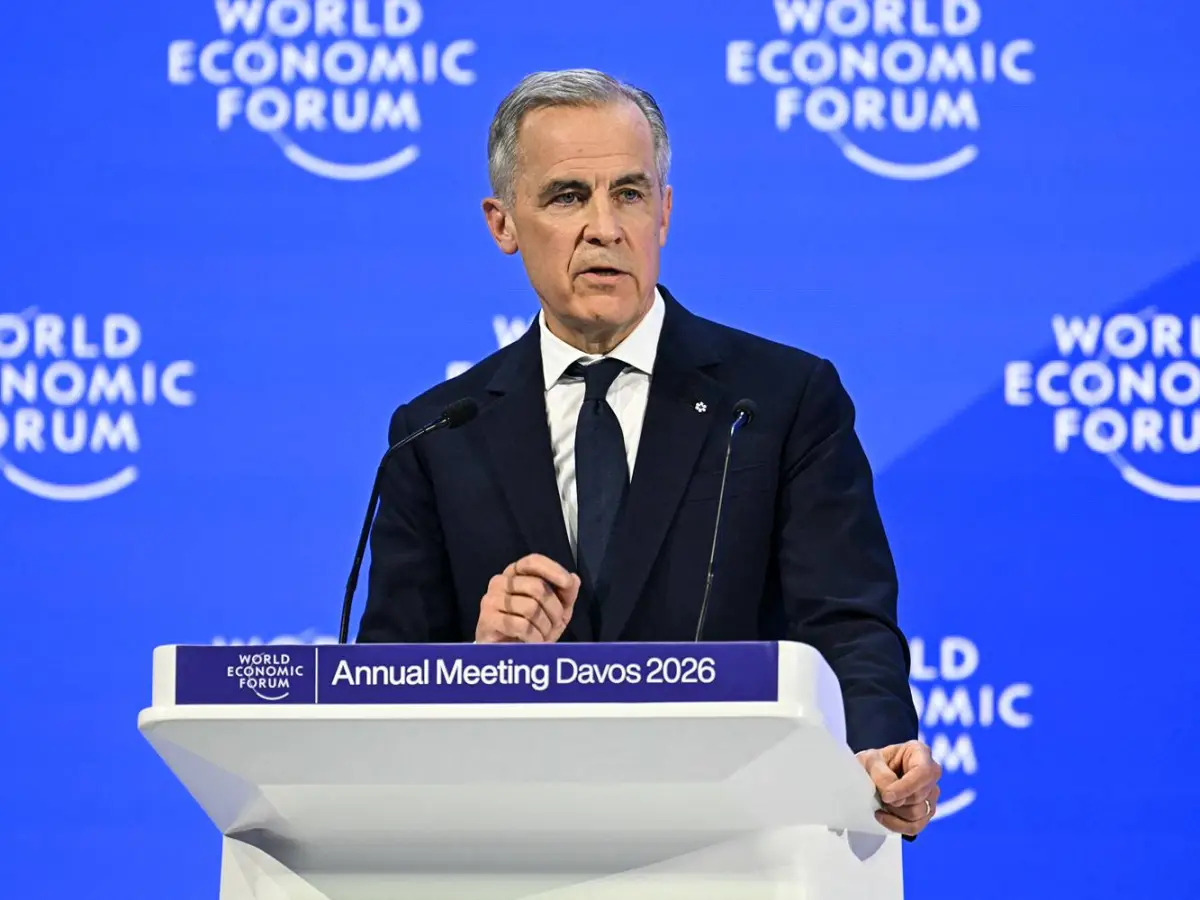
The biggest headline came from Carney himself, who went further than many expected. “We are working towards the deepest possible partnership, short of accession, with Canada becoming the European Union’s first associate member,” he said on Friday.
What that would mean in practice is still unknown. The Prime Minister’s Office says the substance and scope of the status will be worked out in the coming months. Associate membership does not currently exist under EU treaties, and basic questions, such as whether Canada would have any say in EU institutions, have not been answered.
The idea is only six weeks old. Von der Leyen first floated it on September 16 in her State of the Union speech in Strasbourg, with Carney in the chamber as the first foreign head of government ever to attend. Carney welcomed the “ambition” in his own address to the European Parliament the next day, but avoided the label, stressing substance over titles. Canada is not eligible for full membership, which EU treaties reserve for European states.
The label has also caused friction inside Europe. According to The Globe and Mail, the term was not expected to appear in the summit’s joint statement after objections from major member states, including France and Germany. Reports ahead of the summit said some capitals felt the proposal had not been discussed with them before von der Leyen announced it. Pre-summit drafts had aimed to define the new status by next year’s Canada-EU summit in 2027.
European leaders were nonetheless warm in their praise. Costa called Canada “by far the most European of non-European countries.” Von der Leyen said shared values count for more than geography: “It is not so important where the countries are on the map.”
What’s in the deal
More than twenty measures were announced across five areas. Taken together, they aim to turn a relationship long built on trade into one that also covers technology, security and energy.
Trade
The two sides concluded a Digital Trade Agreement, Canada’s first agreement devoted entirely to digital trade. It sets common rules for commerce that happens online, an area the original 2016 trade deal barely touched.
They also finished negotiating a new competition agreement. It will let regulators on both sides of the Atlantic cooperate in going after companies that use anti-competitive practices, a growing concern as large tech firms operate across both markets.
Technology and artificial intelligence
Canada has joined Europe’s supercomputing network, including the JUPITER system. That gives Canadian researchers and businesses access to some of the most powerful computers in the world to train artificial intelligence models, computing power that is scarce and expensive to build at home.
The announcement came one day after Ottawa announced a $1.6-billion investment in Toronto-based AI company Cohere, Canada’s best-known AI firm. Taken together, the two moves signal that Ottawa wants Canadian AI to be built on Canadian and allied infrastructure, not only on American platforms.
Defence and security
Alberta-based De Havilland will receive up to $2.5 billion in financing to expand production of its firefighting waterbombers. Europe has faced increasingly severe wildfire seasons, and drafts circulated before the summit included a commitment to jointly purchase dozens of the aircraft.
Montreal-based Galvion won a contract worth more than $44 million to supply military helmets to Latvia. Canada leads NATO’s multinational brigade there, its largest military mission abroad.
Canada and the EU will also open negotiations on Canadian access to Galileo, the EU’s satellite navigation system and its equivalent of GPS, and to IRIS², Europe’s planned secure satellite communications network. The aim is reliable navigation and secure communications across Canada and the Arctic, where both sides want a stronger presence.
Energy and critical minerals
The European Investment Bank will now be able to invest in Canadian critical minerals projects. Those minerals are essential for batteries and clean technology, and Europe currently gets most of its supply from China, a dependence Brussels has been trying to reduce.
The two sides will also study whether Canada can ship more liquefied natural gas to Europe, which has been looking for new suppliers since cutting back on
Russian energy after the invasion of Ukraine.
Students and researchers
Canada is launching negotiations to take part in more of Erasmus+, Europe’s flagship student exchange program, which could open more study and training opportunities in Europe for Canadian students. It will also seek to join the next round of Horizon Europe, the EU’s major research and innovation funding program.
Why it matters
The stakes are high. The EU is already Canada’s second-largest trading partner after the United States, with about $178 billion in two-way trade last year.
The push for closer ties comes as Ottawa tries to reduce its dependence on the U.S. amid ongoing tariff disputes with Washington. Carney has argued that economic integration, once seen mainly as a strength, is increasingly being used as a weapon by some countries, and that Canada needs more partners it can rely on.
Washington’s reaction
Not everyone is cheering. When von der Leyen first floated associate membership in September, U.S. President Donald Trump called the idea “laughable” and described Canada as a terrible trade partner. He threatened “very serious tariffs” on Europe, or a halt to some trade, if he judged the move to be a “hostile act.”
Carney has brushed off the warnings. He says that, in the end, the United States will see the benefit of a stronger Canada and a stronger Europe working together.
Unfinished business
At home, the Conservatives point out that nine European countries still have not ratified the Comprehensive Economic and Trade Agreement, or CETA, which Canada signed with the EU almost a decade ago. The Conservatives have also said Canada must not accept EU taxes, EU laws or EU immigration rules as part of any new arrangement.
CETA has applied provisionally since 2017, removing most tariffs between the two sides. But parts of it, including its investment protection system, cannot take full effect until every member state ratifies it. Cyprus’s parliament voted it down in 2020, the French Senate rejected it in 2024, and Italy has held it up for years over protections for regional food products.
What comes next
The hard work starts now. Over the coming months, negotiators will try to define what associate membership would actually include, while separate talks begin on Galileo, IRIS², Erasmus+ and Horizon Europe. The next Canada-EU summit, expected in 2027, will show how much of Friday’s ambition has turned into signed agreements.
This summit delivered more than many expected. A digital trade deal, access to European supercomputers, money for Canadian jobs in Alberta and Montreal, and a path for European investment in our critical minerals are real results, not just photo ops.
But the headline promise of associate membership is still a title without a definition, and the details won’t come for months. If Canada wants Europe as a true partner, Europe can show it by finally ratifying the trade deal it signed ten years ago. Words build alliances, but ratified agreements are what make them last.