





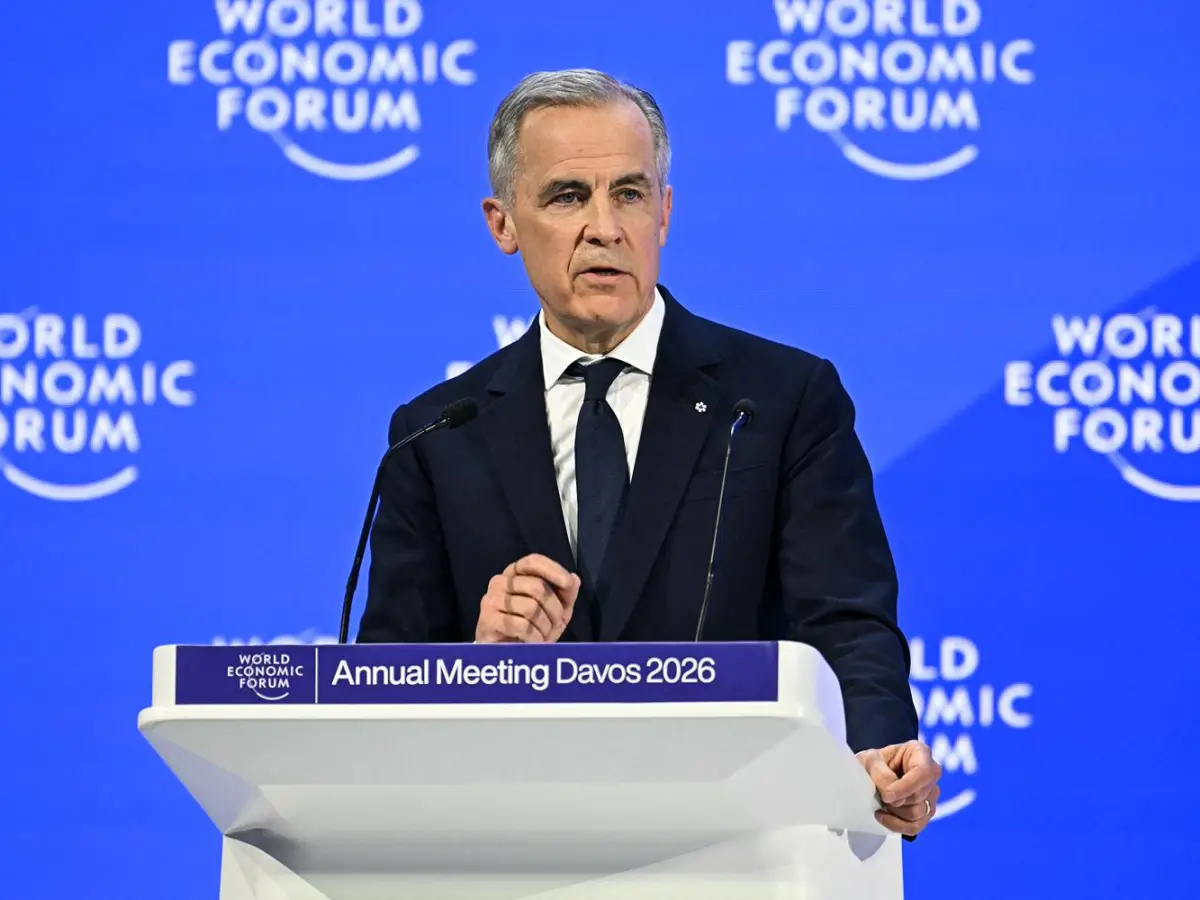
Prime Minister Mark Carney is reorganizing his senior team, with several key advisers taking on new roles in moves Liberal strategists say reflect his effort to put a distinct stamp on the federal government.
Scott Gilmore, currently Carney’s senior adviser on foreign, defence and security policy, will become the prime minister’s principal secretary on July 22. He replaces Tom Pitfield, who was appointed to the Senate last week as part of Carney’s first group of appointments to the upper chamber.
Maia Johnson will take on the newly created position of chief operating officer in the Prime Minister’s Office while continuing to serve as a senior adviser on Canada-U.S. relations.
The introduction of a COO position is a first for the PMO and reflects an organizational structure more commonly associated with the corporate world, aligning with Carney’s extensive business and financial background.
The personnel changes were confirmed by a senior government official who was not authorized to speak publicly.
The reshuffle also follows the departure of deputy chief of staff Braeden Caley, who announced he is stepping down to seek a seat in Parliament in a future byelection in North Vancouver—Capilano.
Caley described his time working for Carney as the “honour of a lifetime” and thanked colleagues in a letter posted to social media.
A longtime Liberal political operative with roots in British Columbia, Caley previously worked as a party spokesperson and led the Canada 2020 think tank while Carney chaired its advisory board. Both Caley and Pitfield played key roles in Carney’s leadership campaign.
Caley is now seeking to move from a behind-the-scenes political role to the House of Commons.
North Vancouver—Capilano was previously represented by former cabinet minister Jonathan Wilkinson, who resigned this spring to become Canada’s ambassador to the European Union. The riding has been held by the Liberals since Wilkinson was first elected in 2015.
Carney has not yet called a byelection in North Vancouver—Capilano or six other ridings recently vacated by MPs.
Liberal commentator Andrew Perez said Caley’s potential move into caucus could give Carney an experienced political ally who is already closely aligned with the prime minister’s agenda.
The upcoming byelections could also provide Carney with an opportunity to bring new members into the Liberal caucus as he seeks to distinguish his government from that of former prime minister Justin Trudeau.
Many current Liberal MPs and cabinet ministers were first elected during the Trudeau era, when the party pursued a significantly different policy agenda.
Perez said changes in the PMO, caucus and political appointments give Carney an opportunity to reshape the Liberals after more than a decade in government and increasingly build a team reflecting his own priorities.
Liberal strategist Greg MacEachern said the restructuring may also signal that Carney’s office is moving toward a more permanent organizational model after his first year as prime minister.
Carney initially had to assemble a team quickly following his Liberal leadership victory and subsequent federal election win. MacEachern said every prime minister ultimately develops a PMO structure suited to their leadership and governing style.
Meanwhile, four candidates are seeking the Liberal nomination in Beaches—East York, where a nomination meeting is scheduled for July 18. The riding was recently vacated by Nathaniel Erskine-Smith.
Dates have not yet been announced for byelections in Beaches—East York, North Vancouver—Capilano or several other vacant federal ridings.
Political observers say Caley’s ties to British Columbia and his close relationship with Carney could strengthen his potential candidacy in North Vancouver—Capilano, particularly if he positions himself as someone with direct access to the prime minister and his governing agenda.