





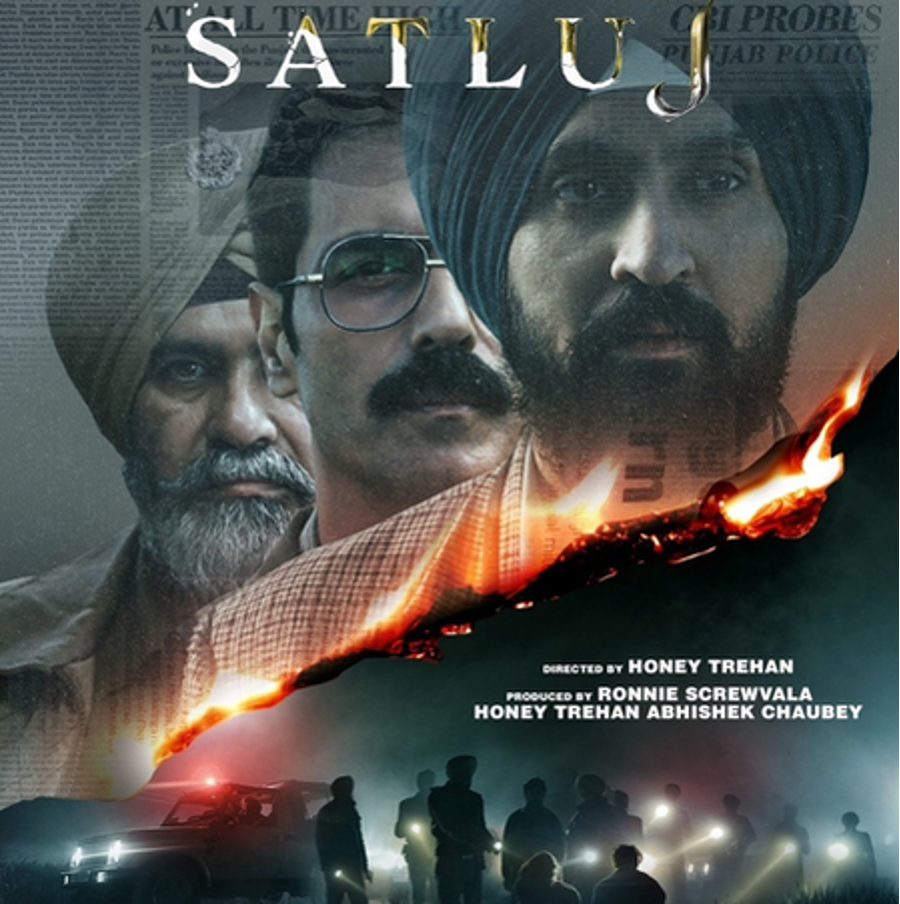
Community screenings of “Satluj,” a film depicting one of the most painful periods in Punjab’s recent history, are drawing audiences across the Indian state after the movie was removed from its streaming platform in India.
Originally titled “Punjab 95,” the film is based on the life of human rights activist Jaswant Singh Khalra, who investigated alleged enforced disappearances, extrajudicial killings and secret cremations during the Punjab insurgency of the 1980s and early 1990s.
The film, starring Diljit Dosanjh as Khalra, had reportedly been stalled for three years after India’s censor board demanded more than 120 cuts. After failing to secure a theatrical release, it debuted on the ZEE5 streaming platform but was removed in India two days later.
The removal, however, has prompted Sikh organizations, activists and local residents to organize community screenings using copies circulating online. Sikh temple compounds, village halls and other community spaces have been transformed into makeshift cinemas, bringing together elderly survivors of the conflict and younger generations born after the insurgency ended.
At one screening in Gurdaspur, villagers gathered in the courtyard of a Sikh temple to watch the film. Organizers arranged projectors, speakers and generators, while volunteers spread information about the screening throughout the community.
“Satluj” focuses on Khalra’s investigation into allegations that thousands of people who disappeared during the insurgency were secretly cremated by police without their families being informed or proper records being maintained.
The Punjab insurgency pitted Sikh militant groups seeking an independent Khalistan against Indian security forces and resulted in the deaths of thousands of civilians, militants and police officers. Human rights organizations documented allegations of enforced disappearances, custodial killings and other abuses during the conflict.
Khalra was abducted in 1995 and later killed. Several police officers were subsequently convicted in connection with his murder.
Inderjeet Singh Bains, who helps coordinate screenings in Gurdaspur district, said the gatherings provide an opportunity for communities to reflect on a period of history that continues to affect families across generations.
“When we screen the film, we see our elders and mothers, many of them 60 or 70 years old, crying because they have lost their sons. Our people have endured immense suffering,” Bains said.
Another attendee, Gurmukh Singh, said the film has helped younger people better understand stories they had previously heard only in fragments from older generations.
“After watching the movie, there is a feeling of the grief our earlier generations had to bear,” he said.
The film’s removal has also renewed debate over censorship and artistic freedom in India. Critics have questioned why audiences should be prevented from watching a film based on historical events, while the Indian government maintains that film certification decisions are made independently under existing law.
Officials have not publicly provided a detailed explanation for the film’s removal, although local media reports have cited security concerns.
ZEE5 said the film would no longer be available for viewing in India “in light of current developments” and added that it would explore appropriate avenues through due process to restore access.
Dosanjh, who portrays Khalra, has said he is not concerned about whether the film remains available online, arguing that once audiences have seen its story, “it cannot be erased.”
Across Punjab, the growing number of community screenings appears to be reinforcing that sentiment. For many viewers, the film has become more than a cinematic portrayal of the past, prompting conversations about grief, memory, justice and a turbulent chapter of Punjab’s history that continues to resonate today.