





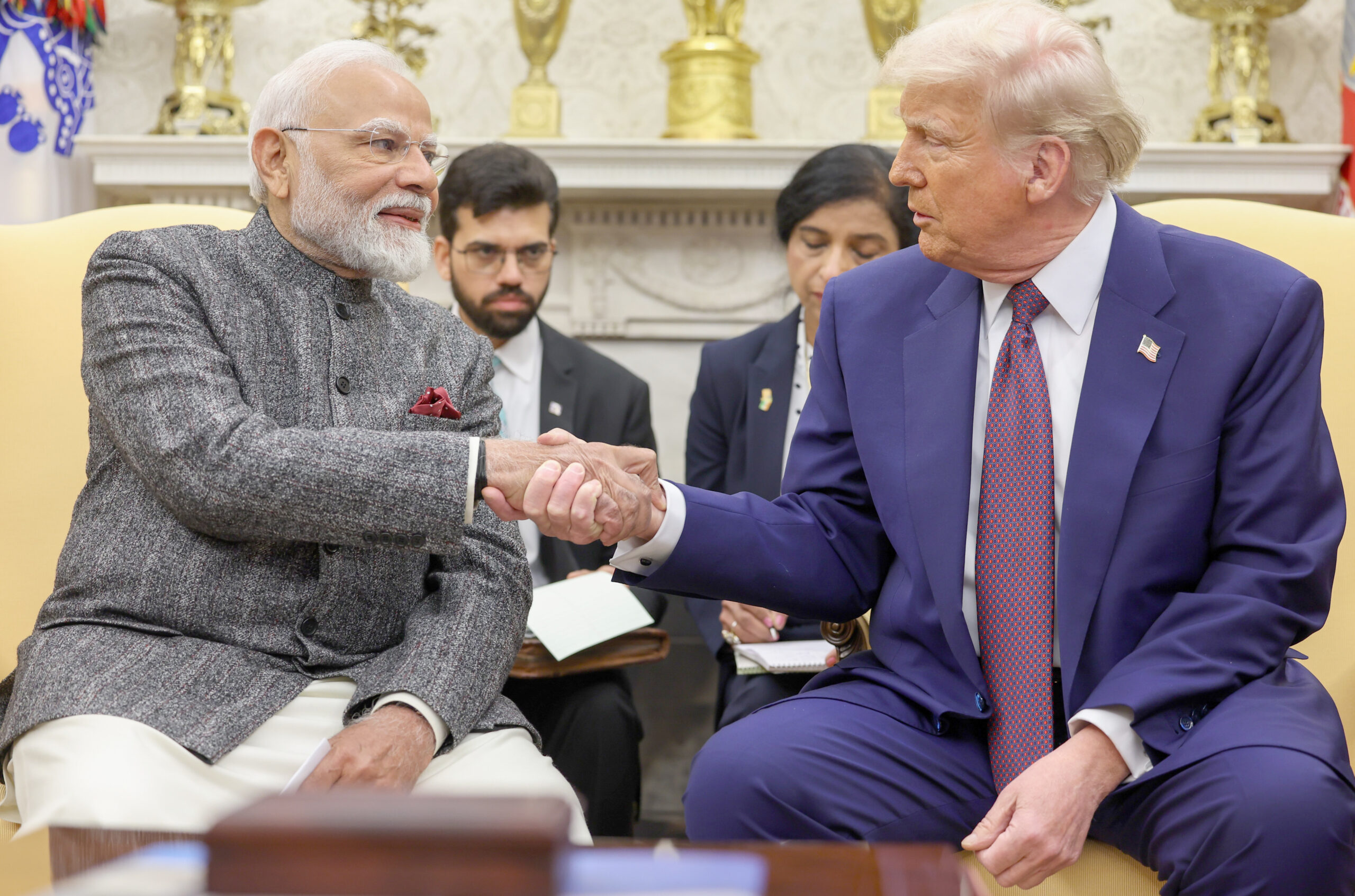
A potential meeting between Indian Prime Minister Narendra Modi and U.S. President Donald Trump on the sidelines of next week’s G7 Summit in France is emerging as a key diplomatic test for two countries seeking to repair a relationship strained by trade disputes, tensions over Pakistan, and the escalating conflict involving Iran.
The anticipated face-to-face meeting in Évian-les-Bains would be the first between the two leaders since relations cooled following last year’s India-Pakistan military confrontation and a series of U.S. tariff measures affecting Indian exports.
The latest challenge comes from the conflict in West Asia. This week, U.S. military operations reportedly struck three Indian-crewed commercial vessels in the Gulf of Oman region, killing at least three sailors and triggering formal diplomatic protests from New Delhi. India’s Ministry of External Affairs twice summoned the U.S. chargé d’affaires to express its concerns over the attacks and their impact on Indian shipping interests.
Despite the tensions, analysts believe both leaders have strong incentives to prevent the latest dispute from overshadowing broader strategic priorities.
“There are bigger issues on the table which both India and the United States need to handle,” said foreign policy analyst Harsh Pant, suggesting that both governments recognize the complexities of operating in an active conflict zone and are unlikely to allow the incident to derail relations.
The meeting would come after several months of efforts to stabilize ties. U.S. Secretary of State Marco Rubio visited India last month for talks with senior officials and Quad partners, while trade negotiators from both countries have continued discussions aimed at finalizing an interim trade agreement first outlined earlier this year.
Trade remains a major issue on the bilateral agenda. Negotiations have continued through multiple rounds of talks in Washington and New Delhi, though unresolved disputes and ongoing U.S. trade investigations have delayed a final agreement.
The Iran conflict adds another layer of complexity. India has significant economic and strategic interests in Gulf shipping routes, with more than 300,000 Indian nationals employed in the global maritime industry. Disruptions in the Strait of Hormuz have affected shipping traffic, energy supplies, and currency markets, increasing domestic pressure on Modi to raise concerns directly with Trump.
Opposition leaders in India have already criticized the government, arguing that the deaths of Indian sailors should be a central issue in any discussions with Washington.
Relations between the two countries have also been complicated by Trump’s repeated claims that he helped broker a ceasefire between India and Pakistan after last year’s conflict—a characterization New Delhi has consistently rejected. Trump’s growing engagement with Pakistan’s leadership, including close ties with military chief Asim Munir, has also generated concern among Indian policymakers.
Still, diplomats on both sides say recent engagement has helped place the relationship on more stable footing. The arrival of U.S. Ambassador Sergio Gor earlier this year has contributed to renewed diplomatic outreach, while public exchanges between Modi and Trump have become noticeably warmer in recent weeks.
While the exact agenda of a possible Modi-Trump meeting remains unclear, trade negotiations, regional security, maritime safety, and the evolving Iran crisis are expected to dominate discussions. For both leaders, the encounter represents an opportunity to prevent recent tensions from undermining one of the world’s most strategically important partnerships.