





Oil prices climbed to their highest levels in six weeks as escalating tensions between the United States and Iran heightened concerns about disruptions to global energy supplies.
Brent crude rose $1.03, or 1.1 per cent, to settle at $97.31 a barrel after reaching an intraday high of $98.06 — its strongest level since July 24. U.S. West Texas Intermediate crude was up $1.17, or 1.3 per cent, at $92.65 a barrel, after earlier touching $93.29.
The latest increase followed a warning from Iran that it could target energy infrastructure across the Middle East if the United States carries out further attacks on Iranian assets.
Iranian Parliament Speaker Mohammad Baqer Qalibaf issued the warning after U.S. Defense Secretary Pete Hegseth described Tehran’s oil fleet as vulnerable.
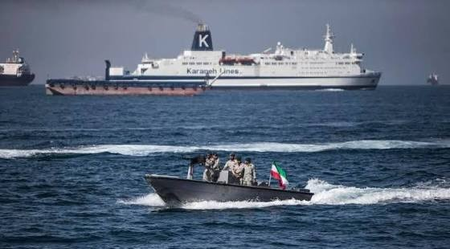
Tensions intensified over the weekend as the United States and Iran exchanged attacks involving oil tankers and warships, marking a significant escalation in the conflict. Maritime intelligence firm Marisks warned that commercial tankers were increasingly becoming instruments of economic pressure as the distinction between military confrontation and civilian shipping becomes less clear.
The renewed fighting has already pushed energy markets sharply higher. Brent crude gained roughly eight per cent last week, while WTI jumped nearly 10 per cent as attacks resumed and concerns mounted over the availability of Middle Eastern oil supplies.
The conflict has also forced countries to rely more heavily on existing petroleum stockpiles to prevent supply shortages. In the United States, gasoline and distillate inventories remain significantly below both year-ago levels and their five-year seasonal averages.
Another major concern is shipping through the Strait of Hormuz, one of the world’s most important oil transit routes. Traffic through the strategic waterway has fallen to its lowest level since May, according to data cited in the report.
Regional tensions have also spread beyond the U.S.-Iran confrontation. Israeli strikes on a town in southern Lebanon killed at least 12 people on Monday, according to Lebanon’s Health Ministry, making it one of the deadliest days of bombardment in the area in recent weeks.
Despite the growing geopolitical risks, OPEC+ has kept its oil production policy unchanged for October, leaving markets focused on whether further military escalation could disrupt production facilities or major shipping routes across the Middle East.