





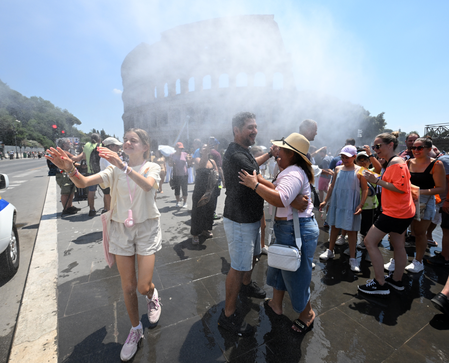
Europe’s record-breaking early summer heatwave has been linked to more than 1,300 excess deaths, according to the World Health Organization (WHO), as several countries continue to experience unprecedented temperatures.
WHO Director-General Tedros Adhanom Ghebreyesus said the deaths have been recorded since June 21 and warned that heat stress has become a growing public health threat across the continent.
“Heat stress is often called the ‘silent killer,'” Tedros said, noting that many European homes, schools and workplaces were not designed to withstand such extreme temperatures. He added that Europe is warming at twice the global average, making it the fastest-warming continent on Earth.
The heatwave continued to break records on Sunday, with Germany registering its hottest day on record for the third consecutive day. Preliminary data showed temperatures reached 41.7°C in Coschen, near the Polish border in eastern Brandenburg.
The Czech Republic also recorded its second consecutive daily temperature record, with 41.1°C measured in Doksany, north of Prague. Poland set a new national record as temperatures climbed to 40.5°C in the western town of Słubice.
France has been among the hardest-hit countries. The French Health Ministry reported approximately 1,000 more deaths than expected since the heatwave intensified last week, with many of the fatalities involving people aged 65 and older. Officials also reported a 40 per cent increase in the number of people dying at home during the period.
The extreme conditions have strained public services and prompted emergency measures across Europe. Authorities in the Netherlands cancelled the Defqon.1 music festival following an unprecedented red weather alert, while Paris banned public consumption of takeaway alcohol and cancelled the city’s Pride march to ease pressure on emergency responders.
France has also recorded at least 74 drowning deaths since the beginning of the heatwave, most occurring in unsupervised rivers, lakes and ponds as people sought relief from the soaring temperatures.
Tedros attributed the unprecedented heat to climate change, warning that what were once considered “once-in-a-generation” heatwaves are now becoming almost annual events. He urged governments across Europe to strengthen heat health action plans to better protect vulnerable populations from increasingly frequent extreme weather events.
Meteorologists say the current heatwave has been intensified by a “heat dome” — a high-pressure weather system that traps hot air, suppresses cloud formation and allows relentless sunshine to further raise ground temperatures across much of the continent.