





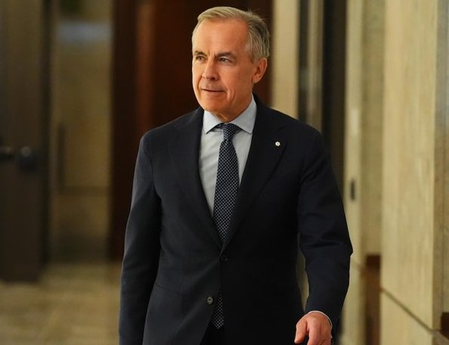
Prime Minister Mark Carney is pursuing an ambitious strategy to diversify Canada’s trade relationships beyond the United States, but industry leaders and government officials say access to the American market remains one of Canada’s strongest selling points to foreign investors.
Since taking office in 2025, Carney’s government has launched multiple trade missions across Asia and other regions, seeking investment in critical minerals, infrastructure, engineering and manufacturing projects. However, officials acknowledge that many prospective partners are primarily attracted by Canada’s privileged access to the U.S. market through the Canada-United States-Mexico Agreement (CUSMA).
With more than 85 per cent of Canada-U.S. trade remaining tariff-free under CUSMA, the agreement has become a central pillar of Ottawa’s investment pitch. A senior Canadian official told Reuters that the trade pact serves as a “baseline” for attracting international investment.
The importance of CUSMA is particularly evident in Canada’s automotive sector. Japanese automakers Toyota Motor Corporation and Honda Motor Co., which together produce more than three-quarters of vehicles manufactured in Canada, have repeatedly raised concerns about maintaining the agreement during meetings with federal officials. Other global firms, including Volvo Group and Kia Corporation, have also lobbied Ottawa to preserve the current framework.
Trade Minister Maninder Sidhu said foreign governments and investors consistently ask about Canada’s relationship with the United States because of the deep integration of North American supply chains.
At the same time, Ottawa continues to pursue new trade opportunities worldwide. Canada has recently signed agreements with Indonesia and the United Arab Emirates and is seeking deals with the Philippines, Thailand, India, the Association of Southeast Asian Nations (ASEAN), and the South American bloc Mercosur. The government is also working to expand trade with China, Japan, Vietnam, Pakistan and Bangladesh.
Non-U.S. exports reached nearly $214 billion last year, a 16 per cent increase from the previous year. Yet the United States remains Canada’s dominant trading partner, accounting for roughly 70 per cent of all Canadian exports, worth approximately $565 billion annually.
Goldy Hyder, president and CEO of the Business Council of Canada, praised efforts to attract investment into energy and critical minerals but noted that major investors from Asia and Europe continue to evaluate Canada through the lens of its connection to the broader North American economy.
Officials in prospective partner countries echoed that view. Allan Gepty of the Philippines’ Department of Trade and Industry said a future trade agreement with Canada would help businesses integrate into a larger economic ecosystem linked to North American supply chains.
The challenge for Carney’s government is balancing two objectives: reducing Canada’s vulnerability to U.S. protectionism while continuing to leverage the American market as a key advantage in attracting global investment. As negotiations over CUSMA’s future approach, Ottawa’s diversification strategy may ultimately depend on maintaining strong access to the very market it is seeking to rely on less.