





Democrats flip seven Senate seats and secure control of the House as voters express frustration over inflation, tariffs, the Iran war and President Donald Trump’s policies.
The Democratic Party has regained control of both chambers of the U.S. Congress following a sweeping victory in the 2026 midterm elections, overturning Republican dominance in several traditionally conservative states and delivering a major political setback to President Donald Trump.
As of Wednesday, November 4, Democrats had flipped seven Republican-held Senate seats in Texas, Ohio, North Carolina, Iowa, Maine, South Carolina and Kansas. The party also made substantial gains in the House of Representatives, with Republican-held districts in Pennsylvania, New Jersey, Kentucky, Iowa, Missouri, Colorado, Texas and Wisconsin shifting toward Democratic candidates.
The results mark a significant change in Washington’s political landscape, with voters expressing growing dissatisfaction over rising living costs, the ongoing war in Iran, widespread tariffs and concerns surrounding the Trump administration’s policies.
Democrats also successfully defended key Senate seats in Georgia, Michigan and Minnesota, strengthening their position in the upper chamber. Meanwhile, races in Mississippi and Alaska remained unresolved as counting continued.
The Democratic takeover of Congress is expected to create significant obstacles for Trump’s legislative agenda during the remaining two years of his presidency.
With control of both the House and Senate, Democrats will gain greater authority over federal spending, presidential appointments and congressional investigations. They are also expected to intensify scrutiny of allegations involving financial conflicts of interest within the Trump administration.
House Democratic Leader Hakeem Jeffries, widely expected to become the next Speaker, described the election outcome as a rejection of Republican policies and pledged to prioritize affordability and government accountability.
“In addition to fighting to make this country affordable, we’re going to bring accountability to those who have visited unprecedented corruption on this country,” Jeffries said Tuesday night.
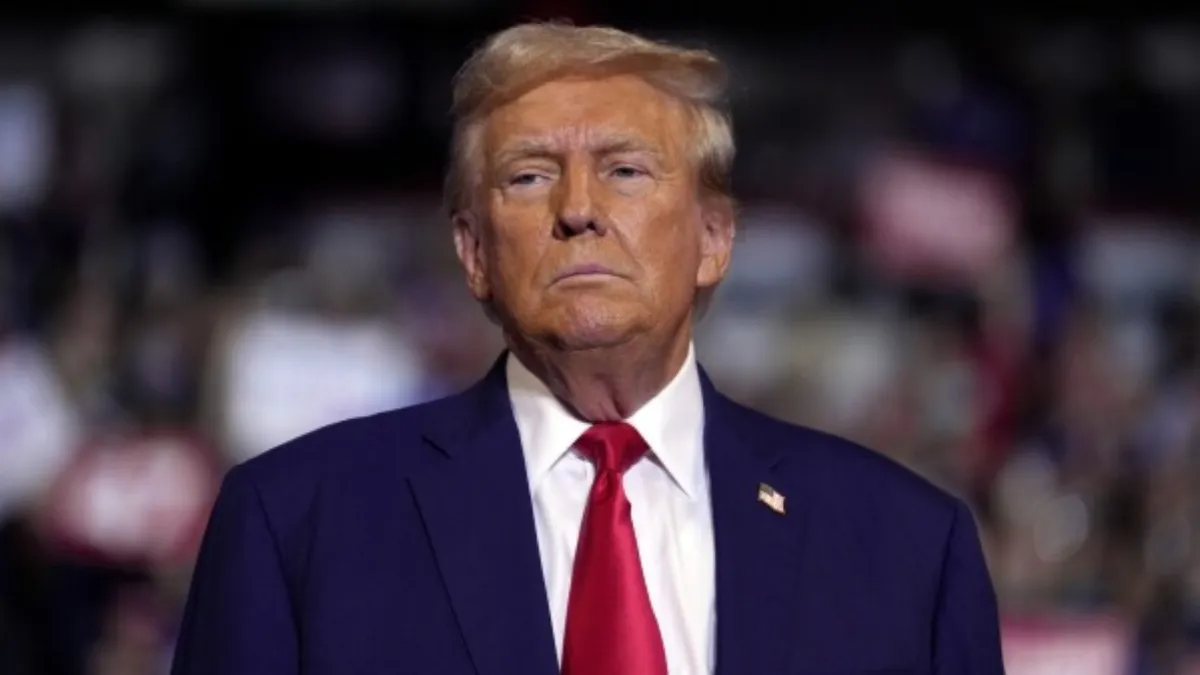
Trump, however, downplayed the significance of the Democratic victories, arguing that his presidential veto authority would allow him to block legislation passed by the new Congress.
Speaking to Fox News, Trump maintained that Democrats would not have unrestricted legislative power despite controlling both chambers.
The president also rejected suggestions that the election represented a personal defeat, emphasizing that he had not appeared on the ballot.
“I don’t like to consider it a defeat for me. I wasn’t on the ballot,” Trump said.
Economic concerns played a central role in the election, particularly as American households faced higher fuel prices linked to the Iran conflict and increased costs associated with tariffs on imported goods.
Other issues influencing voters included the administration’s immigration enforcement measures, reductions to healthcare and food assistance programs, concerns over artificial intelligence data centres and demands for greater transparency surrounding files related to convicted sex offender Jeffrey Epstein.
Several of the Democrats’ most significant victories occurred in states that had strongly supported Republicans in previous elections.
In Texas, Democratic state lawmaker James Talarico defeated Republican Attorney-General Ken Paxton, securing the party’s first Senate victory in the state in 38 years.
Talarico’s campaign focused heavily on Paxton’s political controversies and his close alignment with Trump. Celebrating his victory, Talarico compared his campaign to the biblical story of David and Goliath, describing the outcome as a triumph over powerful political and financial interests.
In Ohio, former Democratic senator Sherrod Brown defeated Republican incumbent Jon Husted, reclaiming a Senate seat in a state whose manufacturing industries have been affected by U.S. tariffs and Canadian retaliatory trade measures.
South Carolina also delivered an unexpected Democratic victory, with pediatrician Annie Andrews winning a Senate seat for the party for the first time since 1998.
The race followed the death of longtime Republican Senator Lindsey Graham earlier this year. His sister, Darline Graham, replaced him as the Republican candidate but struggled to establish herself during the campaign.
In Kansas, Methodist minister Adam Hamilton defeated Republican Senator Roger Marshall, while Iowa elected Democrat Josh Turek, a Paralympic wheelchair basketball player, over Republican Representative Ashley Hinson.
North Carolina’s Senate seat shifted to the Democrats after former governor Roy Cooper won the contest to replace retiring Republican Senator Thom Tillis.
In Maine, Democratic legislator Troy Jackson defeated five-term Republican incumbent Susan Collins, overcoming her longstanding reputation as a moderate within the Republican Party.
Meanwhile, Democratic Senator Jon Ossoff successfully defended his Georgia seat against Republican Representative Mike Collins following a contentious campaign.
The election results also suggest a shift among younger voters and Latino communities, groups that helped Trump secure his 2024 presidential victory after he campaigned on promises of economic improvement.
For Canada, the Democratic gains could carry important implications for bilateral trade relations, particularly as Ottawa continues negotiations with Washington over tariffs affecting automobiles, steel, aluminum and other industries.
Although a Democratic-controlled Congress may increase political pressure on Trump to reconsider certain trade measures, the president retains substantial executive authority over tariff policy.
The new congressional balance is expected to produce a period of heightened political confrontation in Washington, with Democrats seeking to challenge the administration’s domestic and foreign policy decisions.
The scale of the Democratic victories represents a major reversal for Republicans and signals growing public dissatisfaction with the economic and political direction of the United States under Trump’s leadership.