




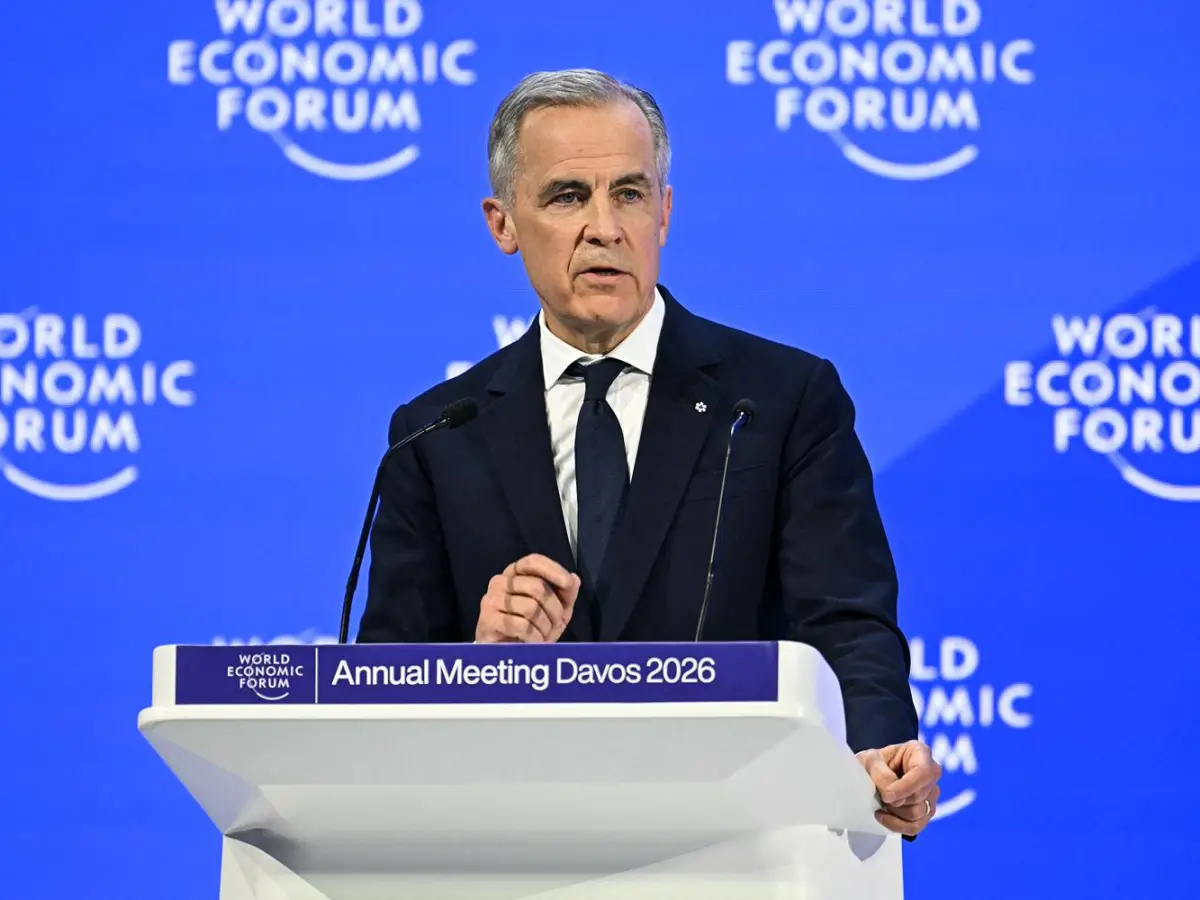
Prime Minister Mark Carney says a preliminary agreement between the United States and Iran to end hostilities in the Middle East could reshape regional security and global energy markets, describing the framework as a “game changer” that exceeded his expectations.
Speaking to the media on the sidelines of the G7 Summit in Évian, France, Carney said he had reviewed a copy of the proposed agreement through confidential sources and was encouraged by its potential impact.
“I have to say, it’s exceeded my expectations. We’re very pleased with the deal that’s been struck,” Carney said.
While the full details of the agreement have not been publicly released, the prime minister said the framework lays the foundation for preventing Iran from acquiring a nuclear weapon, a key objective of Western powers.
“The Rubicon, if I can use that metaphor, has been crossed,” Carney said, suggesting the agreement marks a significant breakthrough in efforts to curb Iran’s nuclear ambitions.
Under the reported framework, negotiations over Iran’s nuclear program would continue during a 60-day implementation period following the formal signing of the agreement. Outstanding issues, including the future of Iran’s stockpile of highly enriched uranium, would be addressed during that process.
Carney also suggested the agreement could help create conditions for broader stability in the Middle East, including progress toward resolving tensions in Lebanon, though he declined to provide further details.
One of the most significant provisions reportedly included in the framework is the reopening of the Strait of Hormuz, one of the world’s most important energy corridors. Roughly 20 million barrels of oil typically pass through the waterway each day, but traffic disruptions during the 100-day conflict triggered sharp increases in global energy prices.
The prime minister said the agreement underscores the risks associated with relying on critical global chokepoints.
“One of the big lessons here is don’t be held hostage to one choke point in the global economy,” Carney said, pointing to Canada’s role as a reliable supplier of energy and critical minerals.
He added that Canada could contribute to the implementation of the agreement through financial mechanisms, including assistance related to the potential unfreezing of assets and other economic measures that may emerge from future negotiations.
Iran has indicated that a final agreement would require progress on issues related to Israel’s military presence in Lebanon, while questions remain over the possible easing of sanctions as talks continue.
With discussions on Iran dominating much of the G7 agenda, Carney said leaders later turned their attention to Ukraine, where Canada announced a new package of sanctions targeting 162 Russian individuals, entities and vessels connected to Moscow’s war effort.
The prime minister described discussions among G7 leaders on Ukraine as constructive and reiterated his belief that Russia is ultimately losing the war.
“The tide is turned in this war,” Carney said. “It is a matter of time. Putin is going to lose this war, and from now until the point that he realizes that or accepts that, it is absolutely senseless slaughter.”
Carney’s remarks highlight Canada’s support for diplomatic efforts aimed at ending conflicts in both the Middle East and Eastern Europe, while reinforcing Ottawa’s commitment to international security, energy stability and economic resilience.