





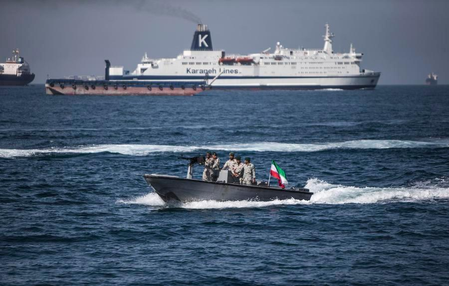
Iran has again declared the Strait of Hormuz closed, escalating tensions in the Persian Gulf and throwing fresh uncertainty over the recently signed U.S.-Iran agreement aimed at ending regional hostilities.
In a statement broadcast over maritime radio channels on Friday, the Islamic Revolutionary Guard Corps (IRGC) said the strategic waterway would remain closed until what it described as key conditions of the agreement are fulfilled, including an Israeli withdrawal from southern Lebanon, the complete removal of the U.S. naval blockade and the withdrawal of American forces from the Gulf region.
The IRGC warned that vessels approaching the Strait of Hormuz could be targeted, advising ships to avoid the area for their own safety.
The announcement came just one day after U.S. Central Command formally lifted its two-month blockade of Iranian ports. Iranian officials argued the blockade has not yet been fully removed, claiming Washington remains in violation of the memorandum of understanding signed earlier this week by U.S. President Donald Trump and Iranian President Masoud Pezeshkian.
The move also coincided with the postponement of planned U.S.-Iran nuclear talks in Switzerland and continuing clashes between Israel and Hezbollah in Lebanon. Israeli Prime Minister Benjamin Netanyahu has insisted Israeli forces will continue security operations in southern Lebanon despite reports of a ceasefire agreement being negotiated.
Analysts say Tehran may be using the phased nature of the U.S. blockade removal as justification for re-closing the Strait while also linking the dispute to Israel’s military presence in Lebanon, a provision that was included in the broader regional agreement but remains unresolved.
The Strait of Hormuz is one of the world’s most important energy chokepoints, handling a significant share of global oil and natural gas shipments. Any prolonged disruption could have major consequences for global energy markets, shipping routes and international trade.
The latest development raises fresh questions about the durability of the U.S.-Iran agreement and the prospects for wider regional stability as diplomatic efforts face mounting challenges.