





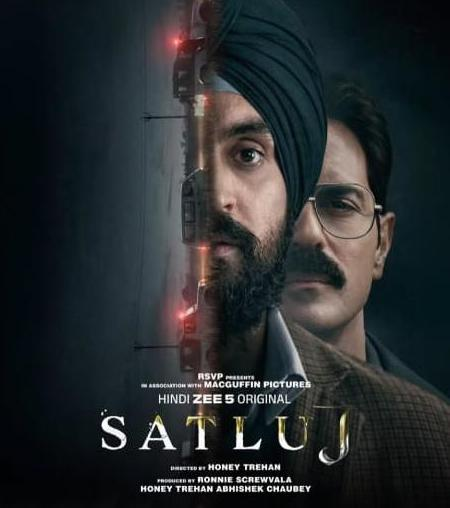
Political parties and Sikh organizations across Punjab have criticized the removal of Satluj, starring Diljit Dosanjh, from the streaming platform ZEE5 just one day after its release, calling the move an act of censorship and demanding the film be restored.
Directed by Honey Trehan, the film tells the story of human rights activist Jaswant Singh Khalra, who exposed the alleged secret cremation of thousands of unidentified bodies in Punjab before being abducted in 1995. Four Punjab Police personnel were later convicted in connection with his abduction and murder.
Originally titled Punjab ’95, the film remained delayed for more than three years after its makers refused to accept 127 cuts proposed by the Central Board of Film Certification. Although it was eventually released without cuts, ZEE5 removed it from its platform in India on Sunday, informing viewers it was no longer available.
The decision sparked criticism across the political spectrum. Leaders from the ruling Aam Aadmi Party, the Shiromani Akali Dal, the Bharatiya Janata Party and the Indian National Congress all questioned the removal.
AAP leaders argued that younger generations should have access to films documenting Punjab’s history, while Shiromani Akali Dal president Sukhbir Singh Badal described the move as “an assault on our collective memory, truth and freedom of expression.”
Congress leader Sukhpal Singh Khaira called Satluj a fact-based film highlighting police brutality and said removing it contradicted court rulings that upheld the convictions of those responsible for Khalra’s murder.
The Shiromani Gurdwara Parbandhak Committee also urged authorities to restore the film, saying the public has a right to understand Punjab’s history.
The film has faced repeated setbacks over the past several years. It was dropped from the Toronto International Film Festival lineup without an official explanation and its planned global release in 2025 was also postponed despite receiving clearance outside India.
The removal has reignited debate over artistic freedom, censorship and how politically sensitive chapters of Punjab’s history should be portrayed on screen.