





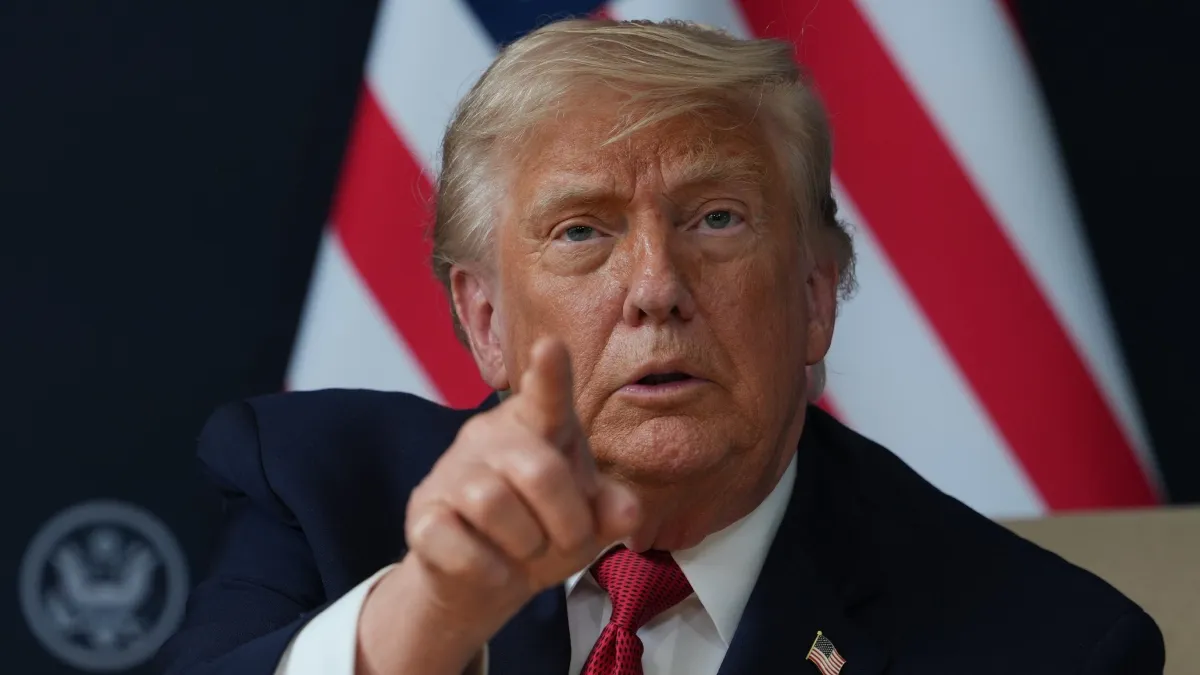
U.S. President Donald Trump has threatened major economic consequences against countries that continue doing business with Iran, escalating Washington’s campaign to economically isolate Tehran as efforts to end the U.S.-Iran conflict remain stalled.
Trump described the initiative as an unprecedented economic operation against Iran, warning that countries whose banks, businesses, airports or government institutions provide Tehran with a financial or commercial “lifeline” could face U.S. penalties. He specifically targeted oil smuggling, financial transfers, exchange houses, shipping registries and companies used to circumvent sanctions.
Iranian Foreign Minister Abbas Araghchi rejected the threats, arguing that Washington’s strategy amounted to economic coercion and could harm the wider global economy. Iranian state media similarly portrayed the announcement as an extension of longstanding U.S. efforts to restrict Tehran’s international trade rather than a fundamentally new policy.
The threat raises questions about how effectively Washington can force other governments to cut economic ties with Iran. The United States can impose so-called secondary sanctions, restricting foreign companies and financial institutions from accessing the U.S. financial system or doing business with American entities if they engage in prohibited transactions with Iran. However, enforcement becomes more difficult when countries are willing to absorb those costs or develop alternative trading mechanisms.
Iran’s Oil Trade Under Pressure
Oil remains Iran’s most important export and a critical source of government revenue. Before the current conflict, Iran was exporting roughly 1.3 million to 1.5 million barrels of crude oil per day, generating an estimated $115 million in daily revenue.
By May, exports had reportedly fallen below 300,000 barrels per day, their lowest level in at least six years, amid sanctions and a U.S. naval blockade affecting Iranian ports.
Iranian officials have acknowledged that oil exports have declined but say Tehran has prepared for reduced revenues. Iran’s non-oil exports between March 21 and August 16 were reported at nearly $15 billion, compared with approximately $17 billion in imports, with overall trade down 24 per cent from the previous year.
China Remains Critical
China is Iran’s most important economic partner, particularly for oil. Estimates of annual bilateral trade vary considerably because sanctions make Iranian trade flows difficult to track.
Oil analytics firm Kpler estimated that China purchased more than 80 per cent of Iran’s shipped crude oil in 2025, with some shipments moving through so-called shadow fleets that use techniques designed to obscure the origin and destination of cargo.
Analysts argue that this relationship illustrates the limits of American sanctions. While U.S. restrictions can increase the financial and logistical cost of trading with Iran, Washington cannot necessarily eliminate commerce when major economies are prepared to resist its sanctions policy.
India and Iraq Maintain Significant Ties
Iran also maintains substantial economic relationships with India and Iraq.
India-Iran bilateral trade stood at approximately $1.6 billion in 2025, with India exporting products including basmati rice, fruits, vegetables and pharmaceuticals. Iranian exports to India include dry fruits, chemicals, minerals and petrochemicals.
India stopped importing Iranian oil in 2019 following renewed U.S. sanctions, meaning Trump’s latest threats could place additional pressure on the remaining commercial relationship.
Before the current conflict, Iran was also exporting approximately $12 billion worth of goods and services annually to Iraq, including gas and electricity as well as private-sector trade.
UAE Embargo Could Deal Significant Blow
The United Arab Emirates, historically one of Iran’s most important trading partners and financial gateways, announced an indefinite trade embargo against Tehran this week after accusing Iranian forces of firing ballistic missiles at Emirati territory. Iran has denied the accusation.
Official UAE-Iran goods trade was worth approximately $6.2 billion in 2023, according to Observatory of Economic Complexity data. The UAE exported about $5.8 billion in goods to Iran while importing roughly $450 million.
More importantly, the UAE has traditionally served as a major commercial and financial hub through which Iranian businesses could access products and international markets despite sanctions. Analysts therefore believe the Emirati embargo could have a greater immediate impact on Tehran than another round of U.S. restrictions alone.
Can Trump Stop Countries From Trading With Iran?
Washington is unlikely to be able to completely eliminate Iran’s international trade. Instead, its most powerful tool is making continued trade with Tehran increasingly expensive and risky.
Companies and financial institutions forced to choose between access to Iran and access to the much larger U.S. economy and financial system may withdraw from Iranian business. This approach has previously succeeded in reducing Iranian oil exports and discouraging international investment.
However, countries including China, Türkiye and others have previously resisted or found ways around American sanctions. Iran has also developed networks involving alternative payment systems, intermediaries and opaque shipping arrangements to maintain some international commerce.
The result is likely to be greater economic isolation and higher trading costs for Iran rather than a complete shutdown of its foreign trade. The effectiveness of Trump’s latest campaign will ultimately depend on whether major Iranian trading partners comply with Washington’s demands — particularly China — and how aggressively the United States is prepared to penalize governments and companies that refuse.