





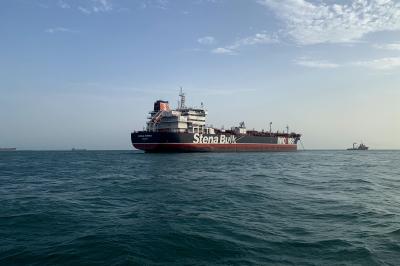
The United States has boarded a санкctioned oil tanker allegedly involved in smuggling Iranian crude, even as Washington and Tehran signal a possible new round of ceasefire talks amid escalating regional tensions.
According to the U.S. Department of Defense, forces conducted a “right-of-visit maritime interdiction” and boarded the vessel M/T Tifani in international waters without incident. The tanker, previously flagged for illicit oil transport in Asia, was located in the Indian Ocean between Sri Lanka and Indonesia.
The operation comes at a critical moment, with a fragile ceasefire between the U.S. and Iran nearing its expiry. Officials from the region indicate that both sides are preparing for renewed negotiations in Islamabad, Pakistan, potentially led by U.S. Vice President JD Vance and Iran’s parliamentary speaker Mohammad Bagher Qalibaf. However, neither country has formally confirmed the talks, highlighting ongoing uncertainty and internal divisions.
Tensions remain high, with U.S. President Donald Trump warning of severe military escalation if a deal is not reached, while Iranian leadership has pushed back, insisting it will not negotiate under pressure and claiming it has “new cards on the battlefield.”
The broader conflict has already disrupted global energy markets. The U.S. blockade of Iranian ports and Iran’s control over the Strait of Hormuz — a critical route for nearly 20 per cent of global oil and gas shipments — have driven oil prices sharply higher, with Brent crude nearing $95 per barrel.
Meanwhile, European officials are scrambling to respond to potential fuel shortages, with warnings that jet fuel supplies could run critically low within weeks. Additional diplomatic efforts are also underway in the region, including renewed Israel-Lebanon talks in Washington aimed at reducing tensions and curbing militant activity.
As ceasefire deadlines approach, the situation remains volatile, with diplomacy and military pressure unfolding simultaneously — raising the stakes for both regional stability and global energy security.