





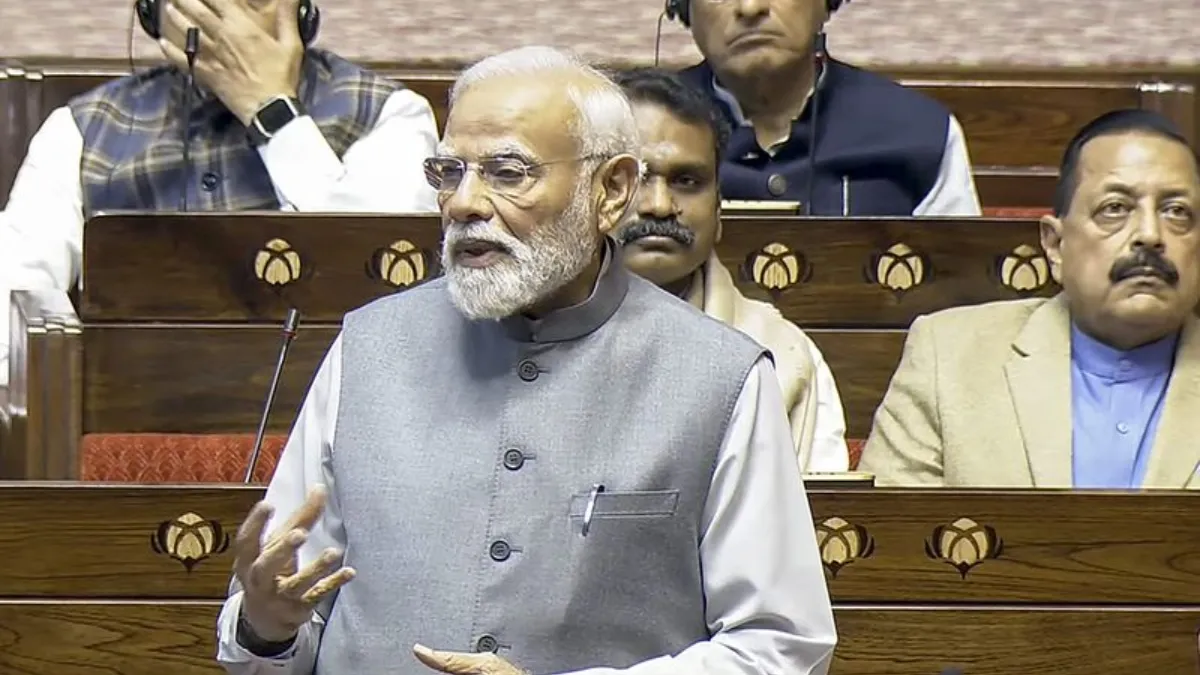
A candid exchange between Prime Minister Narendra Modi and British Prime Minister Keir Starmer on the sidelines of the G7 Summit in France has fueled speculation that India and the United Kingdom have finally resolved outstanding issues delaying the implementation of their landmark free trade agreement.
According to reports, the two leaders were inadvertently caught on a live microphone before their bilateral meeting in Évian, appearing to celebrate a breakthrough in negotiations.
“We did it,” Modi was heard telling Starmer.
“We did it. Yes, yes, yes, I hear. We got it over the line. So this is good,” Starmer replied.
While neither leader explicitly identified the subject of the conversation, the remarks immediately raised expectations that both countries had overcome final obstacles holding up the rollout of the India-UK trade deal signed last year.
The agreement, considered India’s most significant trade pact in a decade and Britain’s largest bilateral trade agreement since Brexit, has faced implementation delays in recent months. India initially pointed to procedural hurdles in the British Parliament, while more recently concerns emerged over the UK’s steel safeguard measures, which sharply reduced tariff-free import quotas for steel products.
According to reports, New Delhi had warned it could revisit some of the concessions granted under the trade agreement if London proceeded with measures that restricted Indian steel exports.
The hot mic exchange offered further indications that a resolution may have been reached. During the conversation, an Indian aide was heard asking how the development should be announced. Starmer suggested issuing a statement and indicated that both governments’ teams would coordinate the announcement.
Although neither country’s official readout of the bilateral meeting referenced the steel dispute, the Indian government’s statement noted that both leaders “looked forward to the early entry into force of the Comprehensive Economic and Trade Agreement,” a phrase widely interpreted as a sign that implementation is now within reach.
The India-UK Free Trade Agreement was concluded in May after more than three years of negotiations covering tariffs, market access, visas, investment and tax-related provisions.
Under the deal, India will reduce tariffs on approximately 90 per cent of tariff lines for British exports, with 85 per cent becoming fully tariff-free within a decade. The United Kingdom, meanwhile, will eliminate duties on about 99 per cent of tariff lines covering Indian exports, providing expanded access for sectors such as textiles, jewellery, engineering goods and agriculture.
Among the most notable provisions are reductions in tariffs on British whisky and gin, which will gradually fall from 75 per cent to 40 per cent over ten years. Import duties on British automobiles will also decline to 10 per cent under a quota system, down from rates exceeding 100 per cent.
The agreement is expected to significantly boost bilateral commerce between the two countries. Annual two-way trade stood at approximately $21.9 billion in 2024, and both governments estimate the deal could add £25.5 billion annually to long-term trade flows.
Alongside the trade agreement, India and the United Kingdom have also launched a broader Vision 2035 partnership framework aimed at deepening cooperation in defence, technology, advanced manufacturing, climate action, education, healthcare and migration.
If the signals from the G7 summit are confirmed, the breakthrough would mark the final step toward bringing one of the most ambitious post-Brexit trade agreements into force and further strengthening the strategic partnership between New Delhi and London.